Stablecoins have evolved from niche financial primitives into a macro-scale economic infrastructure powering everyday finance across the Global South. As of 2025, the stablecoin market exceeds $300B in capitalization with $3.1T in daily on-chain settlement, and emerging markets now drive the majority of this velocity. On Solana, stablecoins in circulation reached $14.4B, catalyzing an ecosystem whose TVL has climbed past $11B as DeFi and real-world payment activity accelerate.
The core drivers of this shift are structural: chronic currency devaluation, high remittance fees, capital controls, and patchy or exclusionary banking systems. These constraints create a natural migration toward USD-pegged digital assets—especially in regions like Latin America, Sub-Saharan Africa, Southeast Asia, and India, where populations are mobile-first and highly sensitive to cost, latency, and reliability.
This is a $500B+ multi-decade opportunity — but three barriers gate real scale:
- Research gaps — Most analyses treat the Global South as homogenous, ignoring region-specific drivers like FX volatility in LATAM, agent networks in Africa, QR rails in SEA, and UPI-enabled behavior in India.
- Developer gaps — Builders often lack localized insights on what actually works for mobile-first, low-ticket, low-data users.
- Adoption gaps — Infrastructure (bridges, on/off-ramps, SMS wallets, liquidity) still lags behind demand, limiting stablecoins’ reach despite clear product-market fit.
This report bridges all three gaps. It provides a data-driven perspective for stablecoin expansion on Solana across the Global South — combining macro analysis, regional intelligence, technical insights, and actionable playbooks for developers, policymakers, and ecosystem builders.
Solana has emerged as the most aligned blockchain for this demand. Its architectural advantages—sub-cent fees, 65k+ TPS, 150ms finality, and mobile-light clients—enable financial use cases that traditional rails cannot support at scale. In markets where users move $5–$50 at a time and remittance fees average 6–9%, Solana’s economics are not just superior; they are necessary. Institutional validation reinforces this trajectory, with stakeholders like Visa, R3, and regulated issuers (e.g., PYUSD, USDCV) settling high-volume transactions on Solana.
Across the Global South, data reveals four dominant adoption engines:
- Sub-Saharan Africa leverages stablecoins for FX hedging, micro-commerce, and mobile-money-linked transfers. Nigeria, Kenya, and South Africa collectively form Africa’s crypto tri-core, where USSD wallets and agent networks drive distribution at scale.
- Latin America has become the world’s stablecoin heartland, with 60%+ of all crypto activity dominated by USD rails. Argentina, Brazil, and Mexico demonstrate deep, retail-driven demand for cross-border flows, savings, and dollarization.
- Southeast Asia sits at the intersection of remittances and digital labor. The Philippines, Vietnam, and Indonesia use stablecoins for OFW payments, freelance income, and small-business trade, amplified by telco \+ QR integrations.
- India, now \#1 in global crypto adoption, channels stablecoins into remittances, trading, and freelance payouts despite strict taxation. With 119M+ users and world-leading digital rails (UPI), India is poised to become the largest stablecoin market globally.
Across these regions, stablecoins have matured into a parallel financial system. They enable real-time remittances at 90% lower cost, hedge inflation amid 30–200% annual devaluations, support merchant payments at sub-1% fees, and act as settlement rails for the growing RWA economy. Solana’s unified liquidity model, performance ceiling, and grassroots distribution advantage make it one of the few chains capable of operating as global payment infrastructure.
The opportunity, however, is gated by “last-mile” constraints: on-ramps, liquidity depth, agent networks, compliance pathways, and low-data UX. The chains that solve these distribution and regulatory frictions will capture the next billion users.
PART I : THE OPPORTUNITY & THE PROBLEM
1\. The Global South Imperative
Stablecoins have stopped being a niche plumbing play — they’re now a macro-scale answer to real economic pain across the Global South. By October 2025 the global stablecoin market crossed \~$300 billion in market cap with daily on-chain flows averaging roughly $3.1 trillion, and much of that velocity is coming from emerging markets. On Solana alone stablecoins in circulation reached about $14.4 billion, helping push the chain’s total TVL past \~$11 billion as DeFi activity accelerates.
Why this matters
Three simple forces explain the surge: currency devaluation, eye-watering remittance costs, and patchy banking rails. Those forces make USD-pegged tokens attractive as both a payment medium and a store of value. Solana’s low fees and high throughput position it as one of the most practical rails for this use-case — especially for mobile-first populations that need fast, cheap transfers.
Regional snapshot
- Latin America: The fastest-growing stablecoin region — roughly 71% of stablecoin activity is used for cross-border payments and remittances. High inflation in countries like Argentina and Venezuela is driving on-chain dollarization.
- North Africa: Despite restrictive regimes in some markets, crypto uptake has accelerated; stablecoins account for \~30% of on-chain volume there, with annual on-chain totals reported in the trillions by August 2025\.
- Global rankings: Chainalysis’ 2025 Global Crypto Adoption Index names the top 10 countries as: India, United States, Pakistan, Vietnam, Brazil, Nigeria, Indonesia, Ukraine, Philippines, and Russia — seven of which are Global South economies. That isn’t a coincidence; it’s a structural signal that adoption is moving where population, inflation pressure, and mobile penetration intersect.
The thesis
Put simply: the demand vector is not speculation alone — it’s practical finance. When local currencies are volatile, people adopt USD-pegged alternatives. When cross-border payments are expensive, stablecoins become a cost-saving mechanism. Solana’s properties make it uniquely well-suited to capture these flows at scale.
Possibilities
- Stablecoins will keep migrating to faster rails. A disproportionate share of new stablecoin flows will route through high-throughput chains like Solana.
- Remittances will be the first large consumer product to cross the chasm. Expect startups and wallets that bundle cheap bridging \+ on-chain conversion to capture meaningful market share in Latin America, Africa, and South Asia.
- A handful of emergent local stablecoins will gain traction — but fiat-backed USDC/USDT dominance persists. Local stablecoins will serve niche FX needs; global liquidity will still cluster around the majors.
- Infrastructure risk will become the gating factor. Bridges, liquidity, and on-ramp UX — not token economics — will determine winners in each region.
Tip for Builders:
If you’re building or deploying in these regions, prioritize on-ramps and local rails (mobile UX, low-cost bridging, stablecoin redeemability). Design for tiny ticket sizes — many users will want to move $10–$100 reliably and cheaply.
Seven of the top ten countries in Chainalysis’ 2025 ranking are Global South nations — that’s not a dataset anomaly, it’s a map of where real product-market fit is forming. The combination of macro pressure \+ mobile adoption has created an addressable market that’s large, urgent, and practical. Solana — with its low fees and high throughput — is one of the most viable rails to unlock that opportunity, provided the plumbing (bridges, liquidity, on-ramps) scales alongside demand.
2\. Why Traditional Finance is Failing
Traditional finance is breaking down exactly where it’s needed most. Today, more than 1.3 billion adults remain unbanked, and over half of them live in Global South economies such as India, Nigeria, Bangladesh and Indonesia. The burden falls heaviest on rural households, low-income workers, and women — the groups least equipped to absorb financial shocks.
The remittance tax no one talks about
Remittances should be a lifeline, but in practice they function like a hidden tax. Global remittance fees still average \~6.5%, and the situation is even worse in Sub-Saharan Africa, where transfer costs routinely push 8–9%. This is nearly triple the UN Sustainable Development Goal target of 3%. The result? Billions of dollars simply evaporate each year — money that should have gone directly into the pockets of families who depend on diaspora income.
Layer on top of this the violent FX swings in inflation-scarred economies. Every devaluation accelerates inflation pass-through, meaning households lose purchasing power faster than they can earn it. Saving becomes irrational; spending becomes defensive; planning becomes impossible.
Infrastructure gaps and systemic priorities
Even when bank rails exist, they’re often slow, fragile, expensive, or outright inaccessible. Currency controls, limited branch networks, fragmented payments systems, and compliance bottlenecks turn basic financial access into a privilege rather than a right.
Meanwhile, highly leveraged debt systems — especially in emerging markets — overwhelmingly prioritize creditor protection over user resilience. Little incentive exists to innovate toward low-cost payments, accessible savings products, or inflation-resistant tools. The result is a vacuum where consumers are forced to choose between bad options and worse ones.
Why users are looking elsewhere
This is the context that pushes millions toward crypto rails — not speculation, but necessity. Mobile-first populations don’t wait for legacy banking to modernize; they move to platforms that simply work. Solana stablecoins offer something the traditional system doesn’t:
- low-cost, near-instant transfers
- global liquidity
- insulation from local currency collapse
- infrastructure that scales to tiny ticket sizes For many users, it’s not about chasing yield. It’s about having a system that doesn’t actively work against them.
PART II: SOLANA'S COMPETITIVE EDGE
3\. Why Solana Wins in the Global South
Solana’s advantage in the Global South isn’t theoretical — it’s architectural. The chain’s design directly aligns with the constraints, behaviors, and economic pressures shaping financial activity across Latin America, Africa, and South Asia.
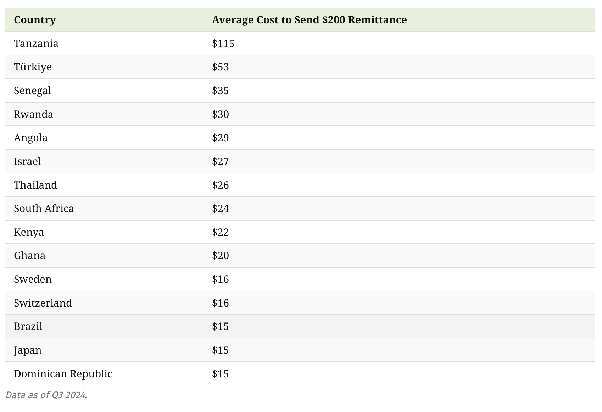
When the average user is moving $5–$50 at a time and paying 6–9% remittance fees, Solana’s low-cost, high-throughput model isn’t just superior — it is necessary.
Ultra-low fees unlock real use cases
Solana delivers sub-cent transaction fees, with base costs at 0.000005 SOL (\~$0.0005 at $100/SOL) and typical totals under $0.004 including priority fees during congestion. This enables microtransactions like $2 remittances, $5 savings deposits, and $1 merchant payments that traditional rails cannot support economically, as their 6.49% average fees (Q1 2025\) on small transfers under $200 equate to $0.13–$1.30 per transaction.
At 65,000+ TPS, the chain can scale to national-level payments without congestion. This is exactly why Solana shines in markets where remittance costs exceed 6% and mobile money rails remain fragmented. For millions of unbanked adults, the difference isn’t marginal — it’s transformational.
Proof-of-History makes speed a feature, not a luxury
The Proof-of-History (PoH) mechanism gives Solana near-instant settlement. With the Alpenglow upgrade, finality tightened to \~150ms, turning high-frequency DeFi and stablecoin transfers into a seamless experience.
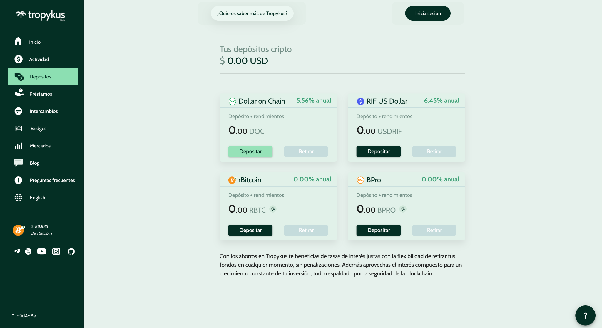
This matters in volatile economies. In places like Venezuela, where inflation erodes savings daily, settlement speed directly protects purchasing power. Solana now supports $15B\+ in stablecoin supply, powering applications ranging from remittances to lending platforms like Tropykus — one of the few financial systems locals of LATAM can rely on during periods of extreme currency devaluation.
Built for mobile-first populations
Roughly 70% of Global South users access the internet primarily via mobile, often on low-end devices with limited data plans. Solana’s lightweight clients, fast RPCs, and low-data wallets fit this constraint perfectly.
This alignment explains why grassroots adoption is exploding:
- India: \~127 million crypto users
- Nigeria: one of the world’s densest stablecoin corridors
Fig: Interesting pattern is seen from the data where developing countries (India, Nigeria, Brazil) have higher percentage of mobile users while western and developed countries have higher desktop users (North America, Europe)
Low fees \+ mobile-first UX \= viral adoption loops.
Institutional validation: RWA \+ global payments rails
Solana’s competitive edge isn’t limited to retail users. Partnerships with Visa and R3 are already routing institutional-grade volume:
- Visa’s stablecoin settlement pilots leverage Solana for speed \+ low cost.
- R3 has already tokenized $17B+ in real-world assets through its integrations on Solana
This places Solana at the intersection of grassroots user adoption and large-scale financial infrastructure — a rare strategic position for any chain.
Most chains are optimized for traders. Solana is optimized for users. And in the Global South, where financial access is broken by cost, latency, and inflation, this distinction determines who wins the next billion users.
3.1 Technical and Economic Advantages
Throughput that outclasses every major chain
In real-world conditions, Solana regularly sustains 3,000–5,000 TPS, with peaks exceeding 100,000 TPS during high-activity periods. With a theoretical ceiling of 700,000\+ TPS, it operates in an entirely different bandwidth class compared to:
- Ethereum: 15–30 TPS on the base layer
- Tron: \~2,000 TPS
The table below compares real-world average TPS (sustained daily throughput) and peak/theoretical capacity across traditional payment systems and blockchains as of late 2025\.
| System/Network | Average/Real TPS | Peak/Theoretical TPS |
|---|---|---|
| Traditional Rails | ||
| UPI (India) | 15,000–20,000 | \~25,000–30,000 |
| IMPS (India) | \~1,500–2,500 | 5,000 (limit-based) |
| Visa | 8,500–25,000 | 65,000+ |
| Mastercard | \~5,000 | \~40,000 |
| RuPay (India) | \~1,000–2,000 | N/A |
| NEFT (India) | \<100 | N/A |
| RTGS (India) | \<50 | N/A |
| Blockchains | ||
| Solana | 750–1,500 | 5,000–107,000 |
| Ethereum L1 | 15–25 | \~60–100 |
| Ethereum L2 Breakdown | ||
| Arbitrum | 40–150 | 4,000+ |
| Optimism | 50–200 | 2,000+ |
| Base | 200–800 | 10,000+ |
| zkSync Era | 100–500 | 20,000+ |
| Ethereum L2 (avg) | 500–8,000 | 19,000–31,000 |
| Polygon PoS | 50–100 | 1,000–5,000 |
| Tron | 66–134 | \~2,000 |
| BNB Chain | 150–390 | 2,000–2,500 |
| Avalanche C-Chain | 100–200 | 4,500 |
| Bitcoin | \~7 | N/A |
| Lightning Network | 1,000s (capacity) | Millions (theoretical) |
Key Inferences from TPS Performance Table
1\. Solana Bridges Traditional & Blockchain Worlds Solana's 750–1,500 sustained TPS with 107,000 peaks positions it as the only public blockchain rivaling national rails like IMPS (1.5k–2.5k) and approaching Visa averages (8.5k–25k), while crushing Ethereum L1 (15–25) and most L2s individually.
2\. Ethereum L2 Fragmentation vs Solana Unity No single L2 exceeds Solana's baseline (Base tops at 800 TPS); aggregate L2 capacity (19k–31k peaks) requires 10+ fragmented chains, cross-bridge delays (days), and $0.01–$0.50 fees vs Solana's single-chain instant settlement at $0.00025.
3\. Traditional Rails Set the Benchmark UPI's 15k–20k TPS proves national-scale micropayments work; Solana uniquely delivers this throughput permissionlessly for Global South remittances where 6–9% fees kill $5–20 transfers.
4\. Low-Throughput Chains Obsolete for Payments Tron (66–134), Polygon (50–100), BNB (150–390) fall short of real-time needs; Bitcoin/L1 Ethereum can't support even basic volume.
For 1.3B unbanked sending micro-remittances amid 150% inflation, Solana \= UPI-class performance \+ Visa costs \+ global access. Ethereum's L2 ecosystem remains developer-friendly but user-fragmented
This performance is driven by Solana’s hybrid Proof-of-History \+ Proof-of-Stake consensus — which timestamps transactions as a shared clock for efficient sequencing. This reduces validator overhead for high throughput and low latency, with security from stake-weighted voting and decentralization via distributed validators.
Fees that actually work for emerging economies
Solana’s average transaction fee sits around $0.00025, and even complex DeFi interactions rarely exceed $0.003. That changes everything.
For users sending $5–$20 payments — the norm across Latin America, Africa, and South Asia — Ethereum L1 gas fees hit $1.85 avg but spike to $15–$95+ during congestion, consuming 75–500% of transfer value which simply eliminates the use case.
That’s how Solana enables true micropayment viability: remittances, savings deposits, in-game earnings, creator payouts, micro-gig income — all at near-zero marginal cost.
Finality measured in milliseconds
With the Alpenglow upgrade, Solana now achieves sub-150ms finality, making it one of the fastest settlement layers in crypto. Upcoming Firedancer enhancements push scalability toward 1M+ TPS, while simultaneously reducing validator costs by 50–80%.
This cost reduction strengthens decentralization and makes global validator participation more accessible — especially important for regions with lower hardware purchasing power.
A stablecoin engine built for inflation-hit economies
These technical advantages directly support Solana’s growing stablecoin economy. With $15B+ in stablecoin supply, It is becoming the settlement layer of choice for people living under:
- Double-digit inflation: Nigeria, Bangladesh, Zambia
- Devaluing currencies: Iran, Lebanon, Vietnam
- Volatile remittance corridors: Sub-Saharan Africa
The chain’s ability to process and settle stablecoin flows at massive scale — without price spikes or latency — gives it a unique competitive moat.
In the Global South, affordability and reliability are not nice-to-haves; they are survival features. Solana’s combination of throughput, fee efficiency, and sub-second finality positions it as the most economically viable chain for the next billion crypto users.
3.2 Competitive Positioning
Solana’s position in the global crypto landscape has shifted dramatically — not just as a fast chain, but as the scalable alternative for emerging markets, retail-heavy ecosystems, and high-frequency stablecoin flows.
Stablecoins: rising fast, gaining share
Solana now commands approximately 5.5–7% of the global stablecoin market, with a circulating supply between $13–15 billion following rapid growth of around 140–146% year-to-date in 2025.
While Ethereum still leads with \~55% market share and Tron dominates specific remittance-heavy corridors, Solana is quickly becoming the chain of choice for mobile-first and cost-sensitive markets.
Solana commands approximately 14-15% of global decentralized exchange (DEX) volume, making it the second-largest ecosystem by activity behind Ethereum, which holds around 45% market share across its L1 and L2 networks. Solana surpasses individual competitors like the BNB Chain's PancakeSwap and Polygon-based DEXs, driven by high transaction activity per user in mobile-first and cost-sensitive markets. This volume share reflects not just liquidity but robust on-chain user engagement and ecosystem growth in 2025\.
A global footprint, not a regional niche
Unlike Tron and BSC, whose traction is heavily concentrated in the Eastern Hemisphere, Solana’s retail base spans multiple continents:
Latin Americas: Brazil, Mexico, Argentina, Venezuela Africa: Nigeria, Kenya, Ghana Asia: India, Indonesia, Vietnam
This geographic diversity matters. It reflects a broader use-case surface, stronger cultural adaptability, and a more resilient adoption curve.
With TVL at $11.7B, Solana now ranks second overall — and is the only chain with both institutional RWA traction (R3/Visa: $17B tokenized) and grassroots retail momentum in emerging markets.
Developer ecosystem: catching up to Ethereum
Developer growth is accelerating at breakneck speed. Solana recorded 42–83% YoY developer growth, outpacing BNB Chain and narrowing the gap with Ethereum.
The ecosystem now includes:
- 8,400+ active contracts
- Jupiter regularly clears over a billion dollars in daily swaps, with recent 24‑hour volumes exceeding $2.2B across nearly 1.5 million trades
- A surge of new DeFi, payments, and stablecoin primitives built natively on Solana
This developer momentum strengthens Solana’s network effects — a critical advantage as emerging-market builders increasingly choose Solana for remittances, microfinance apps, and on-chain savings tools.
How Solana stacks up competitively
vs. Ethereum
Compared to Ethereum’s increasingly fragmented L2 landscape—with multiple rollups, bridges, and still‑volatile gas fees during peak demand—Solana’s single-layer design offers simpler UX, unified liquidity, and consistently low, sub‑cent fees, which is particularly advantageous for emerging‑market and micropayment use cases
vs. Tron
Tron dominates stablecoin flows in a few key corridors, with over 75% of global USDT transfers and strong traction in Asia‑centric trade and remittance routes. But its ecosystem is comparatively narrow: DeFi activity is concentrated in a handful of lending and stablecoin protocols, with far fewer high‑performance DeFi, RWA, and consumer apps than on Solana or Ethereum, and a smaller open‑source developer base
vs. Emerging chains (Aptos, Sui, Monad)
Compared with newer L1s like Aptos, Sui, and Monad, Solana already operates at far greater scale, with a larger user base, deeper liquidity, and a more mature developer ecosystem, so network effects compound much more strongly. High‑profile integrations such as Visa’s stablecoin settlement pilots and R3’s RWA tokenization on Solana provide institutional credibility and real‑world usage that most emerging chains have yet to match.
PART III: REGIONAL INTELLIGENCE
The Global South isn't a monolith — it's a collection of distinct adoption engines, each shaped by local inflation rates, remittance corridors, regulatory postures, and mobile-first infrastructure. This section breaks down the four most critical regions for Solana stablecoin adoption: Sub-Saharan Africa, Latin America, Southeast Asia, and India.
Each follows the same framework:
- Snapshot → market size, key players, adoption stats
- Behaviors → how users actually interact with stablecoins
- Adoption → what's working on the ground
- Infra & policy priorities → what needs to scale
- Quick wins → tactical takeaways for builders
Let's get into it.
4\. Sub-Saharan Africa: The Most Underestimated Stablecoin Frontier
Sub-Saharan Africa (SSA) is one of the most compelling — and most underestimated — markets for stablecoin adoption. With 1.27 billion people, 60% under the age of 25, and $54 billion in annual remittance flows, the region represents one of the most youthful, mobile-first, financially underserved markets on the planet.
Add persistent inflation — Nigeria at 18–24%, Zimbabwe around 28% annually — and the urgency for alternative financial rails becomes obvious.
4.1 Market Opportunity & Key Countries
SSA remains the smallest crypto economy in absolute terms, but it's the third fastest-growing region globally (52% YoY growth), just behind APAC and LATAM. The region received over $205 billion in on-chain value between July 2024 and June 2025\.
Here's the scale:
- 1.27B population, 45% unbanked
- $54B in annual remittances
- $205B in on-chain value moved (July 2024–June 2025), up 52% YoY
- 8% of retail volume comes from transactions under $10k (vs. global 6%) — indicating strong demand for micropayments, micro-remittances, and P2P stablecoin transfers
Stablecoins already fuel 40%+ of retail crypto activity across the region, used for:
- FX hedging
- Day-to-day trade
- USD savings
- Cross-border value transfer
This is a market where low-data, low-cost, mobile-first design is non-negotiable.
🇳🇬 Nigeria — The Anchor of African Crypto
Nigeria is the continent's crypto powerhouse. It received $92.1B in on-chain value, ranking \#6 globally in the Chainalysis Global Adoption Index.
Key stats:
- Stablecoin-heavy usage, particularly USDT/USDC
- 89% of fiat→crypto buys involve BTC or stablecoins
- Adoption persists despite restrictive regulatory actions (the country lifted a 2021 central bank ban on banks dealing in crypto)
- One of the world's strongest grassroots stablecoin corridors
In March 2025, Nigeria saw a $25B surge in stablecoin inflows following a sudden currency devaluation. Users aren't speculating — they're hedging survival.
Regulatory snapshot:
- Launched the naira-backed cNGN stablecoin pilot in early 2025 under an SEC sandbox
- The Investment and Securities Act 2025 formally recognizes digital assets as securities and grants the SEC broad licensing authority over VASPs
- Nigeria mandates that reserve assets for global stablecoins (GSCs) be maintained domestically — a significant policy constraint
🇰🇪 Kenya — The M-Pesa Bridge
Kenya ranks \#28 globally in crypto adoption. Its strength lies in the intersection of mobile money and crypto rails.
Key stats:
- M-Pesa crosses 37.9M active users — crypto usage often piggybacks mobile-money familiarity
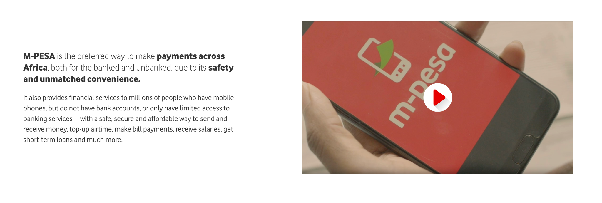
- FX volatility \+ remittances create natural demand for stablecoins
- Kenya's Solana-based KDT (July 2025 launch) supports 200M+ monthly stablecoin transactions
Regulatory snapshot:
- The VASP Bill (April 2025\) establishes a dual-regulatory approach:
- Central Bank of Kenya (CBK) supervises stablecoin issuers
- Capital Markets Authority (CMA) oversees exchanges and tokenization platforms
- Issuers face mandatory licensing, reserve-backing requirements, and periodic audits
Kenya is the clearest example of regulatory experimentation meeting grassroots demand.
🇿🇦 South Africa — Regulated and Maturing
South Africa ranks \#30 globally and is the most advanced regulatory environment in SSA.
Key stats:
- 248+ FSCA-licensed CASPs (crypto asset service providers)
- A handful of merchants (e.g., Pick n Pay) accept BTC, but stablecoins dominate user activity
- Substantial institutional activity and high share of large-ticket volumes, often driven by arbitrage strategies
Regulatory snapshot:
- South Africa possesses an advanced regulatory framework that has fostered a more institutionalized crypto market
- Currently formulating its policy approach to stablecoin regulation (Stage 1 implementation for GSCs)
- No constraints on the listing of stablecoins on trading platforms
- Financial institutions like Absa Bank are actively exploring crypto custody and stablecoin issuance
Kenya \+ Nigeria \+ South Africa together form the Africa’s tri-core adoption engine.
4.2 User Behavior and Use-Case Intensity
SSA's user patterns differ sharply from Western markets:
- 89% of users still rely on feature phones — USSD/SMS-based wallets matter more than mobile apps
- Stablecoins dominate retail flows:
- In Nigeria, 89% of fiat→crypto buys involve BTC or stablecoins
- Users hedge inflation using USDT/USDC daily
- March 2025 saw a $25B surge in stablecoin inflows during devaluation shocks
- Onafriq connects 500+ payment systems across 37 countries, enabling cross-border stablecoin pathways at scale
Crypto adoption trends in SSA are intrinsically linked to financial inclusion challenges, where a large number of adults remain unbanked. Stablecoins and Bitcoin serve as practical solutions for persistent challenges like hedging against inflation, facilitating cross-border trade, and providing financial access.
Stablecoins are frequently used in high-value transactions tied to trade flows between Africa, the Middle East, and Asia, supporting sectors such as energy and merchant payments, which rely on crypto as a settlement rail.
4.3 Adoption
Solana adoption is accelerating through a mix of agent networks, mobile wallets, and USD-rails integrations:
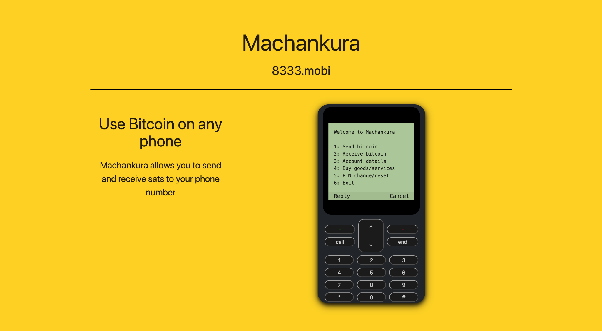
- Yellow Card and Machankura (Lightning → Solana corridors) Yellow Card and Machankura are African fintech platforms enabling crypto payments and remittances
- Machankura focuses on Bitcoin Lightning Network access via basic feature phones (USSD codes)
- Yellow Card provides stablecoin infrastructure (including USDC on Solana) across overlapping African markets
- Tether \+ Quidax run education \+ savings pilots targeting inflation hedging

- Solana-based USDPT remittance pilots report up to 95% cost reduction vs. Western Union fees
- Merchant onboarding is spreading through agent networks rather than app stores — grassroots distribution beats app-based onboarding across SSA.
4.4 Infrastructure & Regulatory Priorities
To unlock mass adoption, Solana's infrastructure must align with regional constraints:
Local on-ramps:
- Solana Ramp, AlchemyPay, Banxa — already live in 100+ countries
Low-data wallets:
- USSD/SMS-based hybrids like Bundle Africa are critical for feature-phone users
Developer ecosystems:
- Superteam Nigeria (35k+ followers, 200+ projects)
- Funded $10M+ in Solana grants \+ projects (e.g., Ribh Finance)
- Kenya's Solana-based KDT (July 2025 launch) supports 200M+ monthly stablecoin txns
These infrastructure layers form the backbone for remittances, microfinance, merchant payments, and informal trade — the core economic engines of SSA.
Regulatory challenges:
- SSA jurisdictions face weaker capacity to address AML/CFT risks
- Difficulty adjusting surveillance, regulatory, and supervisory frameworks due to resource constraints
- Nigeria's mandate for GSCs to maintain reserves domestically creates friction for global stablecoin issuers
Predictions: SSA by 2027
- Nigeria surpasses $150B in annual on-chain volume, driven by stablecoin remittances and FX hedging
- Kenya's KDT becomes the dominant stablecoin rail for East African cross-border trade
- At least 3 African countries launch CBDC pilots that integrate Solana for settlement
- Agent networks onboard 5M+ users to Solana-based wallets via USSD/SMS rails
- South Africa becomes the institutional hub for RWA tokenization in Africa
Tip — Building for Sub-Saharan Africa
💡Prioritize USSD/SMS wallets over app-based UX. Focus on agent network distribution (churches, community leaders, mobile money agents) rather than app stores. Design for feature phones first, smartphones second.
If you can't work with a feature phone, you can't scale in SSA.
5\. Latin America: The Stablecoin Heartland
Latin America has become one of the world's most dynamic crypto economies. The region received $1.5 trillion in on-chain value, marking 63% YoY growth, with stablecoins accounting for 60%+ of all activity.
The macro forces are clear: over $150 billion in annual remittances, chronic inflation — Argentina (\~31% YoY), Venezuela (\~172%) — and widespread USD demand. It's no surprise that 71% of crypto usage in the region is tied directly to cross-border payments and FX hedging.
5.1 Market Opportunity & Key Countries
LATAM saw strong crypto adoption growth of 63% YoY, ranking as the second fastest-growing region globally.
Here's the breakdown:
- $1.5 trillion in on-chain value received
- 60%+ of activity is stablecoin-based — payroll, commerce, remittances
- 80% of transactions are under $1,000 — true retail-sized flows
This is a region where stablecoins are becoming the de facto everyday dollar.
🇦🇷 Argentina — The Stablecoin Heartland
Argentina is the poster child for stablecoin adoption. The country received $93.9B in total on-chain transactions, with 61.8% being stablecoins — one of the highest ratios globally.
Key stats:
- Severe peso devaluation → surging USDT demand
- Ripio's wARS (peso stablecoin) strengthens local rails and on/off-ramp liquidity
- Stablecoins make up over half of all exchange purchases in Argentine Peso
Argentina is one of the strongest natural stablecoin PMFs in the world.
Regulatory snapshot:
- Due to high inflation and capital controls, stablecoins are widely used
- Resolution No. 1058/2025 requires VASPs (domestic and foreign) to register with the Comisión Nacional de Valores (CNV)
- Argentina's regulatory approach focuses on AML/CFT and market integrity, with limited requirements related to financial stability (Stage 2 implementation for CAs)
🇧🇷 Brazil — The Payments Giant
Brazil dominates the region, accounting for nearly one-third of all LATAM crypto activity, receiving $318.8B in value.
Key stats:
- Brazil's growth rate of 109.9% period-over-period makes it the region's most dynamic crypto market
- 90%+ of flows are stablecoin-based — payroll, commerce, remittances
- PIX \+ Mercado Pago integrations significantly amplify stablecoin velocity
- Institutional banks are now exploring RWA settlement on-chain
Brazil is becoming the region's most important formal crypto infrastructure hub.
Regulatory snapshot:
- Implemented the Brazilian Virtual Assets Law (BVAL) (2022/2023), which set requirements for crypto firms
- Banco Central do Brasil (BCB) is the relevant AML/CFT authority
- BCB is proactively integrating crypto-asset oversight into its FX framework by requiring CASPs to report customer transactions
- Brazil is in the early stages of drafting GSC frameworks and may not mandate full bankruptcy-remoteness due to legal limitations
🇲🇽 Mexico — The Remittance Corridor
Mexico received $71.2B in on-chain activity and is the clearest example of stablecoin rails replacing legacy remittance networks.
Key stats:
- Bitso processed over $6.5 billion in US-Mexico remittances in 2024 via stablecoins (USDT/USDC), capturing more than 10% of the world's largest corridor (\~$64.7B total inflows to Mexico)
- Majority's Solana USDC wallet enables instant US→MX transfers for millions of migrant workers
Regulatory snapshot:
- Financial authorities aim to maintain a "healthy distance" between cryptoassets and the domestic financial system
- Use of crypto-assets is restricted to internal transactions not involving the public
- Financial institutions are not permitted to carry out external operations with cryptoassets
- This limits capital flow risks from remittances (Stage 1 implementation for CAs)
5.2 User Behaviors & Remittance Corridors
Latin American users overwhelmingly rely on mobile-first P2P flows:
- 80% of transactions are under $1,000 — true retail-sized flows
- The region relies heavily on Centralized Exchanges (CEXs), with 64% of activity taking place on these platforms
- Stablecoins dominate CEX activity, acting as inflation hedges
- Users cash out via local fiat rails: PIX, SPEI, pagadores, mobile money
- Activity spikes during devaluation events — but retention remains high, indicating persistent, not speculative, demand
Officials report that over 90% of Brazilian crypto flows are now stablecoin-related, underscoring their critical role in payments and cross-border transfers. Stablecoins make up over half of all exchange purchases in Colombian Peso, Argentine Peso, and Brazilian Real.
LATAM is a top remittance corridor:
- Venezuela received $37.4B in cryptoassets in 2022, driven by the need to store value due to currency depreciation
- In Mexico, one major crypto exchange processed $1B in remittances in the first half of 2022 (3.6% of total flow)
Stablecoins are attractive in cross-border transfers where remittance costs remain high and transactions take days to settle.
5.3 Adoption & Infra
Adoption is accelerating through a mix of exchange-led distribution, agent networks, and builder ecosystems:
Brazil's exceptional growth is driven largely by institutional and large institutional transfers, which grew in excess of 100% period-over-period.
Prominent local platforms:
- Mercado Bitcoin, Ripio, Bitso have strong user bases, offering fiat on-ramps, remittance services, and integrations with local payment systems
- Traditional banks (Itau) and neobanks (Mercado Pago, Nubank) are entering the crypto space
Bitso and Ripio use agent networks to onboard 5,000+ merchants across Argentina and Mexico
Superteam Brasil now funds 50+ Solana-native projects, from payments to micro-credit
Brazil's regulatory sandbox and El Salvador's pro-crypto stance are enabling licensed stablecoin issuers
The combination of remittance demand \+ regulatory reform is creating a perfect growth loop.
To achieve meaningful penetration, Solana's ecosystem must keep strengthening regional infrastructure:
Local on-ramps/off-ramps:
- Alchemy Pay (via dLocal and local payments across LATAM)
- Banxa (18+ LATAM countries)
Low-data wallets:
- Critical for Brazil's favelas, Venezuela's patchy mobile networks, and rural Mexico
Merchant integrations:
- Shopify \+ Stripe → stablecoin settlement rails for SMEs
RWA tokenization:
- Growing inflows powering early pilots for tokenized trade finance and invoice factoring
The infrastructure is converging around a simple insight: Latin America runs on mobile, USD, and P2P commerce — exactly where Solana's performance advantage compounds.
5.4 Policy Constraints and Workarounds
Brazil:
- Most advanced regulatory framework in LATAM
- BCB requires CASPs to report customer transactions for FX monitoring
- Early stages of drafting GSC frameworks
Argentina:
- Resolution No. 1058/2025 requires VASP registration with CNV
- Focus on AML/CFT and market integrity
- Limited financial stability requirements
Mexico:
- Restrictive stance: financial institutions not permitted to carry out external operations with cryptoassets
- Use of crypto-assets restricted to internal transactions
- Limits capital flow risks but constrains institutional adoption
Predictions: LATAM by 2027
- Brazil crosses $500B in annual on-chain volume, driven by institutional RWA tokenization and stablecoin payments
- Argentina's stablecoin supply surpasses $20B, making it one of the top 5 stablecoin economies globally
- Mexico's remittance corridor sees 25%+ of flows routed through stablecoin rails (Bitso, Majority, others)
- At least 2 LATAM countries launch regulated stablecoin frameworks, enabling compliant issuance
- Solana becomes the dominant L1 for LATAM remittances, outpacing Ethereum and Tron
Tip — Building for LATAM
💡Prioritize PIX/SPEI integrations for instant fiat on/off-ramps. Focus on agent network distribution in Argentina and Mexico. Design for low-data wallets in Brazil's favelas and Venezuela's patchy networks.
If you can't integrate with local payment rails, you can't scale in LATAM.
6\. Southeast Asia: The Remittance & Freelance Powerhouse
Southeast Asia is one of the most active corridors for remittances, freelance income, and cross-border digital labor. The region processes $98B+ in annual remittances (2025), powered by millions of overseas workers (OFWs) and a booming freelancer economy.
In markets with 90%+ smartphone penetration, stablecoins reduce traditional 6–8% fees to under 1–2%, with settlements measured in minutes, not days — a natural fit for the region's mobile-first financial culture.
6.1 Market Opportunity & Key Countries
The Asia-Pacific (APAC) region is the fastest-growing region globally for crypto adoption, with a 69% YoY increase in value received. The region's total transaction volume reached $2.36 trillion in the 12 months ending June 2025\.
India, Pakistan, the Philippines, and Brazil ranked highest for crypto adoption globally between January and July 2025\.
Key SEA countries:
- Philippines: \#9 globally
- Vietnam: \#4 globally
- Indonesia: \#7 globally
🇵🇭 Philippines — The Global Remittance Hub
The Philippines is arguably the most important crypto→fiat remittance corridor globally.
Key stats:
- $41B in annual remittances (2025 est.)
- \#9 on the Chainalysis Global Crypto Adoption Index
- Coins.ph and PDAX handle USDC/USDT flows for OFWs
- TransFi enables near-instant PHP conversions
- GCash integrates USDC rails for 100M+ users — one of the strongest stablecoin distribution channels in the world
- 70% of crypto activity is tied to remittances
Regulatory snapshot:
- Has a final regulatory framework but generally focuses on IT risk management standards (mandating regular vulnerability assessments and business continuity plans)
- Framework does not explicitly address crypto-asset borrowing and lending beyond prohibiting CASPs from providing margin to clients
- Uses risk-based reporting frameworks
🇻🇳 Vietnam — P2P and Developer Powerhouse
Vietnam ranks \#4 globally and mixes retail adoption with strong builder culture — a rare combination.
Key stats:
- Among Southeast Asia's strongest crypto developer ecosystems
- High P2P usage for FX hedging and small-business trade
- Rising non-USD stablecoin experimentation: 10,000+ addresses (Q2 2025\)
- VND volatility pushes users toward daily stablecoin flows
Vietnam is a core region where crypto serves as everyday infrastructure for remittances, gaming, and savings.
🇮🇩 Indonesia — Freelance-Driven Adoption
Indonesia ranks \#6 globally and is one of the strongest drivers of stablecoin utility via digital labor.
Key stats:
- Freelancers receive stablecoins through platforms like Deel, bypassing local friction
- Regulatory sandboxes pilot local-pegged stablecoins on Polygon/BSC, with parallel Solana integrations
- High demand for USD rails among gig workers and cross-border SMEs
Regulatory snapshot:
- Has a final regulatory framework and mandates that CASPs implement comprehensive risk management frameworks
- Collects financial statements monthly but generally lacks comprehensive data collection and financial risk reporting (Stage 1 implementation for GSCs)
- Focusing on cross-border collaboration and policy review related to capital flow management systems
6.2 User Behaviour
Southeast Asia's usage patterns closely resemble Latin America's retail profile:
- 80% of transactions are under $1,000
- In the Philippines, 70% of crypto activity is tied to remittances
- In Vietnam/Indonesia, 40% of flows come from freelance payouts
- Merchant settlements increasingly use regional stablecoins like XSGD (GrabPay, Alibaba ecosystem)
- DEX volumes hit $136M in Q2 2025 (despite a 66% QoQ dip during market cooling)
Pakistan (part of APAC) is driven by its large diaspora ($35B in remittances), where stablecoins are used to hedge inflation and freelancers get paid in crypto.
User behavior is diverse — but always mobile-first and USD-centric.
6.3 Adoption
Solana adoption is accelerating through the region's unique mix of telcos, fintechs, and developer communities:
Telco partnerships (e.g., Globe \+ GCash bridges) help onboard merchants and end-users
Superteam's strong Asia presence via hackathons, events, accelerators grows the Solana developer pool
The MAS framework (Singapore) licenses compliant SGD/G10 stablecoins, strengthening institutional on/off-ramps
South Korea (a key APAC market) is driven by professional traders and speculation. South Korea is now considering the development of a regulatory framework for KRW-backed stablecoins, focusing on issuance by banks and regulated financial institutions.
Singapore & Hong Kong emphasize strong, detailed standards as the route to building a digital asset hub:
- Both jurisdictions have finalized comprehensive frameworks for both crypto-assets and stablecoins (Stage 5\)
- Hong Kong formally implemented its stablecoin framework in August 2025
- Both have robust requirements for governance and recovery/wind-down planning
- Singapore explicitly denies direct access to the central bank's payment system for stablecoin issuers
The corridor combines grassroots usage with one of the strongest regulatory sandboxes in Asia.
6.4 Infrastructure Priorities
To scale across Southeast Asia's fragmented financial landscape, Solana must align with local payment infrastructure:
Local on-ramps:
- AlchemyPay \+ Banxa integrate directly with QR systems and ASEAN BAC payments
Low-data wallets:
- Essential for rural areas in Indonesia/Philippines; USSD-support matters
Cross-chain complementarity:
- Polygon: 39% traction
- BSC: 23% traction
- Solana serves the high-TPS, low-fee execution layer for cross-border trade and real-time settlement
Thailand employs a cautious stance, explicitly prohibiting high-risk activities like borrowing, lending, margin trading, and derivatives to mitigate credit risk. CASPs are also prohibited from facilitating the use of crypto-assets as a means of payment.
The region's infrastructure shows a stable pattern: EVM chains for distribution, Solana for throughput.
My Predictions: SEA by 2027
- Philippines' GCash integration drives 10M+ users to Solana-based USDC wallets
- Vietnam becomes a top-5 Solana developer hub, driven by hackathons and builder grants
- Indonesia's freelancer economy routes 50%+ of cross-border payouts through stablecoin rails
- Singapore and Hong Kong launch Solana-native stablecoin issuers, targeting ASEAN corridors
- Solana captures 15%+ of SEA remittance flows, outpacing Ethereum and Tron
Tip — Building for SEA
Prioritize telco \+ QR integration first, then optimize for low-data wallets and instant fiat rails — that's where real adoption lives. If you can't integrate with GCash, GrabPay, or local telcos, you can't scale in SEA.
7\. India: The Giant
India now sits at the center of global crypto adoption. It ranks \#1 on Chainalysis' 2025 Global Crypto Adoption Index, processing $135B in annual remittances (growing 14% YoY) and hosting a massive base of 119M+ crypto users.
Stablecoins play an outsized role: they hedge 5–6% annual rupee depreciation, facilitate cross-border flows, and trade at a 3–5% premium on USDT inflows — driven entirely by grassroots demand despite a punishing 30% tax regime.
7.1 Macro Snapshot & Segments
India is a unified digital payments market unlike any other. UPI processes over 690 million daily transactions, surpassing Visa's global volume and forming the backbone of India's financial UX.
Key stats:
- $338 billion in on-chain value received (largest market in APAC)
- 119M+ crypto users
- $135B in annual remittances (growing 14% YoY)
- 80% of transactions remain under $1,000
Key segments:
- Remittances: India has a large diaspora with remittance needs (70% of flows involve remittances: USD → USDT → INR)
- Freelancers/Income: Young adults use crypto trading as a supplementary income; freelancers increasingly choose USDC/USDT for payouts
- Digital Infrastructure: India's thriving fintech ecosystem, widespread use of UPI payments, and innovations like eRupi provide strong foundations for digital finance growth
The combination of digital ID and other services (the "India stack") significantly boosted bank account ownership, from 20% in 2008 to 80% in 2017.
Stablecoin activity flows through FIU-registered exchanges such as CoinDCX, ZebPay, collectively processing $10B+ annually in USD inflows and domestic P2P swaps.
On the policy side, the RBI's CBDC pilots and the 2025–26 Economic Survey exploring crypto frameworks signal the earliest signs of structured engagement — but retail behavior continues to far outpace regulation.
7.2 User Behaviors & Regulatory Posture
India's crypto usage mirrors other Global South retail patterns yet operates at far larger scale:
- 80% of transactions remain under $1,000
- 70% of flows involve remittances: USD → USDT → INR
- Freelancers increasingly choose USDC/USDT for payouts
- Bitcoin \+ stablecoins dominate trading volume
- UPI bridges (CEX → UPI → bank) enable instant cash-outs, despite KYC friction
Users treat stablecoins as a hybrid of:
- A savings hedge
- A payment rail
- A bridge currency for dollar inflows
Regulatory posture:
India is classified as a jurisdiction with a limited supervisory program, focusing primarily on AML/CFT compliance. It is an EMDE, meaning macro-financial risks are likely larger due to incentives to use crypto-assets driven by higher inflation rates and unstable currencies.
- Partial enforcement framework: The government is examining policy approaches to implement the GSC recommendations (Stage 1\)
- India currently lacks specific rules regarding stablecoin listing
- Enforcement: India blocks apps and websites of unregistered CASPs (including offshore ones) and imposes fines, requiring non-compliant entities to either register with the Financial Intelligence Unit (FIU)-IND or cease services for Indian users
- Coordination: Regulators and law enforcement agencies are collaborating to establish clear frameworks and oversight
7.3 Adoption
Strategies:
India's adoption strategy is driven by telcos, UPI-first fintechs, and an enormous developer base:
- PhonePe, Jio, and other UPI-linked platforms potentially exploring pilot programs for merchant crypto acceptance
- Superteam India is one of Solana's strongest communities globally, funding 1,000+ developers and consistently leading new joins
- Hackathons across Bangalore, Delhi, and Hyderabad drive Solana-native projects in payments, tooling, and compliance
Solana is now the most active L1 ecosystem for Indian developers — surpassing Ethereum in hackathon output and new smart-contract deployments.
Organizations such as the Bharat Web3 Association are actively working to normalize crypto as a secure and legitimate mode of value transfer. Grassroots adoption is evident in everyday life, where crypto is used for small-scale income opportunities.
Risks:
India faces significant challenges related to capital flow management systems (CFMs) due to the borderless and pseudonymous nature of crypto-assets. The growing use of crypto-assets raises concerns about financial stability and regulatory sovereignty.
Policy efforts emphasize cross-border collaboration to mitigate risks of regulatory arbitrage and enhance monitoring. India must continue to prioritize capacity development and the strengthening of its monetary framework as a first line of defense against macro-financial risks.
To scale nationwide, Solana must integrate deeply with India's unique digital stack:
FIU-compliant on-ramps/off-ramps:
- AlchemyPay, Banxa
UPI \+ Aadhaar-enabled KYC:
- Essential for compliant retail usage
Low-data Solana wallets:
- Necessary for India's rural 2G/3G networks
Hybrid compliance frameworks:
- On-chain analytics \+ FEMA alignment support legal cross-border flows
Result: Stablecoin rails can reduce remittance fees by up to 90% compared to traditional corridors.
India's strength lies in its unparalleled digital rails — if Solana aligns with UPI scale, the region becomes the largest stablecoin market in the world.
Predictions: India by 2027-28
- India crosses $500B in annual on-chain volume, driven by remittances and freelancer payouts
- Superteam India funds 2,000+ Solana developers, making India the largest Solana dev hub globally
- UPI-native stablecoin wallets reach 50M+ users, enabling instant INR→USDC→INR flows
- At least 1 major Indian bank launches Solana-based remittance rails, following regulatory clarity
- India becomes the \#1 Solana market by active wallet count, surpassing all other regions
Tip — Building for India
Prioritize UPI-native UX and FIU-compliant on-ramps, then add a low-data wallet experience — that's where adoption and regulatory traction meet. If you can't integrate with UPI, you can't scale in India.
Regional Intelligence as Competitive Advantage
The Global South isn't a monolith — it's a collection of distinct adoption engines, each shaped by local inflation rates, remittance corridors, regulatory postures, and mobile-first infrastructure.
Here's what matters:
Sub-Saharan Africa: USSD/SMS wallets, agent networks, feature-phone-first design
Latin America: PIX/SPEI integrations, agent networks, low-data wallets Southeast Asia: Telco \+ QR integration, GCash/GrabPay bridges, instant fiat rails India: UPI-native UX, FIU-compliant on-ramps, low-data wallets
The chains that solve the "last mile" problem — bridges, liquidity, on-ramps, mobile UX — will capture the lion's share of flows.
Solana's low fees, high throughput, and institutional validation give it a unique edge. But infrastructure must scale alongside demand.
The race is on. And the winners will be those who understand that regional intelligence is competitive advantage.
PART IV: THE STABELCOIN ENGINE: STATE AND USE-CASES
Stablecoins aren't a DeFi sideshow anymore — they're the settlement layer for the Global South's financial system. This section breaks down Solana's stablecoin infrastructure, from supply and liquidity to real-world use cases driving adoption at scale.
We'll cover:
- State of Play → supply, market share, institutional integrations
- Use Case Activation → remittances, savings, merchant payments, RWA tokenization
Let's get into it.
8\. Stablecoins on Solana — State of Play
With $15B+ in stablecoin supply, Solana is now processing real-world flows — remittances, merchant payments, inflation hedges — at a scale that rivals (and in some corridors, surpasses) Ethereum and Tron.
This isn't hype. This is measurable traction.
8.1 Supply & Market Share (USDC, USDT, PYUSD, Others)
Solana now commands approximately 5.5–7% of the global stablecoin market, with circulating supply between $13–15B following 140–146% YoY growth in 2025\.
Global context:
- USDT and USDC jointly account for 83–93% of the total fiat-backed stablecoin market cap globally
- Their high transaction volumes highlight their central role in crypto market infrastructure
- Ethereum still leads (\~55% market share), Tron dominates specific remittance corridors
But Solana is the fastest-growing stablecoin settlement rail for mobile-first, cost-sensitive markets.
Major Stablecoins on Solana
USDC (Circle)
- The dominant stablecoin on Solana for institutional and retail flows
- Used in remittances, merchant payments, and DeFi collateral
- Integrated into major products like Stripe, Visa, Shopify
USDT (Tether)
- Strong retail adoption across LATAM, Africa, and Asia
- Used for P2P FX hedging, informal trade, and savings
- Preloaded on JamboPhone for emerging-market merchants
PayPal USD (PYUSD)
- USD-pegged stablecoin circulating as an SPL token on Solana
- As of September 2025, PYUSD has a market cap of over $1.27 billion, securing its position among the top 10 stablecoins
- Designed for digital payments, driving retail adoption 5× in LATAM/SSA
USD CoinVertible (USDCV) — Société Générale-Forge
- Regulated stablecoin launched in 2025
- Issued on both Solana and Ethereum
- Targets institutional settlement and cross-border treasury management
USDS (Sky)
- Overcollateralized stablecoin backed by U.S. Treasuries under Sky Protocol.
- Expanded via Wormhole, enabling native cross-chain transfers
- Supply passed \~$100M in 2025.
- Valued for transparency and composability as a low-risk collateral layer in DeFi.
Emerging Stablecoins
Beyond the large issuers, Solana’s architecture has attracted a second wave of stablecoin experiments, each targeting a specific niche — compliance, yield, liquidity access, or geographic reach. Rather than being variations of the same U.S. dollar token, these assets represent competing design philosophies.
- Some, like FDUSD or Agora’s AUSD, replicate the narrow‑banking model with full fiat or treasury backing under regional licenses.
- Others, such as Ethena’s USDe or Solayer’s sUSD, explore synthetic and yield‑bearing approaches where stability is managed through hedging or treasury‑linked returns.
- Protocol‑native currencies including USDY (Ondo) and cfUSD (Brale) embed on‑chain payment logic for use in enterprise settlement and fintech integrations.
- A newer category blends several stablecoins into a composite reserve — examples include *Perena’s \USD, which holds a weighted basket of PYUSD, USDC, and USDT** for liquidity consistency.
- Meanwhile, tokens like MoveUSD and PST (Huma) bridge directly into payments infrastructure, aligning Solana rails with remittance and PayFi use‑cases.
This breadth signals the fragmentation of the “stablecoin archetype.” On Solana, stability is no longer tied to a single proof model — fiat custody, overcollateralization, and algorithmic balancing now coexist. But it also introduces information asymmetry: end‑users cannot always discern which assets carry cash backing, crypto exposure, or hedged derivatives risk.
As Solana’s stablecoin economy matures, classification frameworks akin to credit ratings may emerge to help users evaluate redemption reliability and risk premiums.
Key takeaway: Major regulated stablecoins like PYUSD and USDCV are deploying on Solana alongside Ethereum — signaling that Solana meets the standards required by regulated institutions for digital payment and settlement rails.
8.2 Transfer Velocity, Liquidity, and Settlement Rails
Solana's use by institutional issuers confirms it functions as a highly efficient settlement rail within the broader digital asset ecosystem.
Why stablecoins work on Solana:
Scalable, low-cost, fast transfers
- Stablecoins enabled by DLT platforms allow for scalable, low-cost, and fast transfers across payments, settlement, and collateral management
- Solana's sub-cent fees and sub-second finality make it ideal for high-frequency, retail-sized flows
Peer-to-peer transfers without intermediation
- Stablecoins operate like digital cash, allowing peer-to-peer transfers without continuous intermediation
- Settlement occurs on blockchain networks, removing multiple intermediary steps and shortening cross-border settlement windows from days to seconds
Crucial for tokenized asset settlement
- Stablecoins are a crucial element in the settlement leg of trading tokenized bonds, equities, and funds
- This highlights the requirement for fast and transparent infrastructure — exactly where Solana excels
Liquidity depth:
Solana is now the \#2 chain by DEX volume (27.7% of global share), ahead of Ethereum (\~18%) and BNB Chain (\~18%). This liquidity depth makes stablecoins on Solana highly usable — not just wrapped or bridged, but actively deployed in DeFi, payments, and cross-border trade.
8.3 Institutional Integrations & Custody Models
Solana's adoption by regulated financial entities confirms its capacity to handle institutional-grade digital asset activities.
Financial Institution Issuers:
The deployment of PYUSD (PayPal) and USDCV (Société Générale-Forge) on Solana demonstrates that the platform is meeting the standards required by regulated institutions for digital payment and settlement rails.
This is a big deal. When major banks and fintech giants choose Solana, it signals operational efficiency, reliability, and regulatory credibility.
Institutional settlement pilots:
- Visa's stablecoin settlement pilots leverage Solana for speed \+ low cost, settling $225M+ on Solana corridors
- JPMorgan Kinexys is settling $1.5T in multi-currency flows across Solana/Ethereum
- R3 Corda routes $17B+ of tokenized assets into Solana DeFi as collateral for lending markets
Custody Risks (General Context):
Custodians and wallet providers form a critical layer, offering the main interface for users to access, store, and transact digital assets.
Key risks:
- Custodial stablecoins expose users to counterparty risks, including mismanagement of reserves, default by the issuer, or regulatory actions
- Failure or abuse at the custody layer (e.g., withdrawal freezes, mismanagement of collateral) can disrupt user access and undermine trust in stablecoin redemption — as highlighted by events like the FTX collapse
- Custodians must strictly segregate client assets from their own and protect assets in trust
This is why regulatory frameworks (MiCA, Singapore MAS, Hong Kong HKMA) now mandate reserve audits, bankruptcy-remoteness, and redemption guarantees for stablecoin issuers.
Stablecoin Infrastructure by 2027
- Solana surpasses $30B in stablecoin supply, driven by remittance and merchant adoption in LATAM, Africa, and SEA
- At least 3 major banks launch Solana-native stablecoins, targeting EMDE corridors
- PYUSD market cap crosses $5B, driven by Shopify \+ Stripe integrations
- Solana becomes the dominant L1 for institutional RWA settlement, outpacing Ethereum L2s
- Liquidity depth on Solana DEXs reaches 35%+ of global share, making it the most liquid stablecoin rail
Tip — Evaluating Stablecoin Infrastructure
When choosing a stablecoin rail, prioritize:
- Fee efficiency — can your users afford $15–$50 gas fees? (If no, Ethereum is out.)
- Liquidity depth — can you instantly swap $10k–$1M without slippage? (Solana wins.)
- Institutional validation — are regulated issuers deploying here? (PYUSD, USDCV \= yes.)
Solana checks all three boxes.
9\. Use Case Activation: From Flows to Products
Stablecoins on Solana aren't just circulating — they're actively deployed in real-world use cases at scale. This section breaks down the four most important categories: remittances, savings/inflation hedges, merchant payments, and tokenized RWAs.
9.1 Remittances
$905B+ in global remittances (2025) — and the Global South bears the brunt of legacy friction. Corridors across SSA ($54B), LATAM ($174B+), and SEA/India ($250B+) still pay \~6.5% average fees (8.8% in SSA) for transfers that take 3–5 days.
Stablecoins flip this: \< $0.01 fees and 90–92% cost reductions with near-instant settlement.
Solana's Edge
This is where Solana shines. With 65k TPS and $0.00025 fees, it enables remittance UX that legacy rails simply cannot match.
Products building real-world flows:
- Sling Money (50+ countries, USDP → mobile wallets)
- Sphere (120+ countries, crypto-to-bank compliant rails)
- TransFi \+ Coins.ph (Philippines OFWs, USDC → PHP in minutes)
- Majority's Solana USDC wallet (Mexico–Colombia transfers for 20M+ users)
Even Visa's USDC pilot has settled $225M+ on Solana corridors.
Case Studies — Real Usage, Real Flows
🇳🇬 Nigeria → 🇮🇳 India
Conduit reaches a $10B annualized run rate (16× YoY), letting diaspora users convert USD → USDT → INR for \<1% total cost, compared to Western Union's \~7%.
This is a $6B+ annual savings for users — capital that previously leaked to intermediaries.
🇦🇷 Argentina → 🇺🇸 USA
Ripio moves $2.5B/month in USDT as 211% inflation drives dollarization. Majority's Solana USDC rails enable Mexico–Colombia transfers for 20M+ users.
Stablecoins are no longer a hedge — they're the primary medium of exchange for cross-border commerce.
🇵🇭 Philippines OFWs
TransFi \+ Coins.ph convert USDC → PHP in minutes, capturing \~70% of remittance share where legacy rails still charge 6–8%.
GCash integrates USDC rails for 100M+ users — one of the strongest stablecoin distribution channels in the world.
Savings & Scale
Cutting 90%+ of fees unlocks $50B+ annually for households — capital that previously leaked to intermediaries.
Meanwhile, institutional infrastructure is scaling too:
- JPMorgan Kinexys is settling $1.5T in multi-currency flows across Solana/Ethereum
- PYUSD integrations are boosting retail stablecoin adoption 5× in LATAM/SSA
Cost Comparison: Legacy vs Stablecoin Rails
| Route | Legacy Cost | Stablecoin Cost | Savings |
|---|---|---|---|
| Nigeria → India | 7–9% (\~$70 on $1k) | \<1% (\~$10 on $1k) | 85–90% |
| Mexico → USA | 5–7% (\~$60 on $1k) | \<1% (\~$10 on $1k) | 83–85% |
| Philippines → USA | 6–8% (\~$70 on $1k) | 1–2% (\~$15 on $1k) | 75–80% |
| Argentina → Brazil | 8–10% (\~$90 on $1k) | \<1% (\~$10 on $1k) | 88–90% |
My Predictions: Remittances by 2027
- Stablecoin rails will dominate money-in-motion long before tokenization reaches full maturity
- Solana will continue winning high-frequency remittance corridors thanks to UX, cost, and developer tooling
- The next unlock: compliant, instant fiat off-ramps in Tier-2 cities across LATAM/SEA/India
- Expect corridor-specific stablecoins (e.g., local FX pairs) to emerge as liquidity deepens
Tip — Evaluating Remittance Primitives
If you're evaluating remittance primitives, test flows on Solana first — its cost/latency profile is unmatched for retail-heavy corridors. Prioritize on-ramps that integrate with mobile money (M-Pesa, GCash) and instant fiat rails (PIX, UPI).
9.2 Savings & Inflation Hedges
$15B+ in stablecoin supply on Solana now acts as the Global South's fastest USD hedge — sub-second swaps, $0.00025 fees, and 65k TPS powering real-time P2P conversions during currency devaluations.
In markets like Argentina and Venezuela, 30%+ of all digital-asset wallets already hold USDT/USDC for day-to-day spending.
Solana's Role
Solana has become the de facto "FX escape hatch" across inflation-hit economies. Its low fees and high throughput enable:
- Instant stablecoin hedging (USDT/USDC)
- Retail P2P swaps during volatility spikes
- Merchant pricing in USD-equivalents during hyperinflation
- Near-zero-cost settlement for informal economies that otherwise lack dollar rails
This is not theoretical — this is happening at national scale.
Case Studies — Real Currency Hedging on Solana
🇦🇷 Argentina
- $93.9B crypto turnover, 61.8% in stablecoins
- Ripio processes $2.5B/month in USDT premiums
- Peso loses \~200% value; businesses price goods directly in USDT
- Solana DEXs route everyday swaps when FX markets freeze
🇳🇬 Nigeria
- $92.1B in on-chain volume — the highest in Africa
- 11.9% of the population (25.9M) holds stablecoins
- 10–30% of citizens use crypto as inflation hedge
- Naira devaluation \+ 34% inflation → USDT becomes the "functional savings account"
🇻🇪 Venezuela / 🇧🇴 Bolivia
- Retailers list prices directly in USDT
- Government integrates stablecoin custody into formal structures
- Stablecoins effectively operate as "Binance Dollars" amid 100%+ inflation
Currency Instability Crisis
Hyperinflation is not an exception — it's the macro environment across the Global South:
- Argentina: 140–237%
- Nigeria: 21.9–34%
- Venezuela: 100%+
- Turkey: 65%
Locals lose 10–200% of savings annually. With capital controls and forex shortages, crypto becomes the only liquid USD access point — driving $412B in crypto inflows, 45% of which are stablecoins.
Stablecoins as Digital Dollar Preservation
USDT/USDC function as modern dollar accounts:
- Argentina: 61.8% of all crypto buys are stablecoins
- Nigeria: $22B stablecoin transactions support \~55–65% informal economy via P2P payments and inflation hedges
- P2P swap markets become real-time FX markets
- Stablecoins preserve what local fiat destroys
Implementation — How Users Actually Hedge
Savings Clubs
- Nigerian cooperatives (Xend, thrift groups) convert savings to USDC to earn 1–2% vs \~1% fiat
- Protects 55–65% of GDP tied to informal structures
- Argentina's rotating "savings pools" (ROSCA-style) now price contributions in USDT
Yield Products (Solana DeFi)
Solana-native platforms like Kamino and UXD allow households to:
- a broad range of on-chain yield products
- lending and liquidity pools on Solana offer mid‑single‑digit APYs (around 3–8%), with some vaults and incentive campaigns occasionally reaching double‑digit yields (10–15%+), depending on market conditions and risk
- earn safer, more stable returns by using strategies that cancel out price risk (delta-neutral)
- access yield-bearing stables (T-bill backed) directly
This is personal finance rebuilt on-chain.
Success Metrics — Does It Actually Work?
Yes — and increasingly at scale. Standard Chartered estimates that individuals in emerging markets already hold about $173B in stablecoins as savings, with that figure projected to reach $1.22T by 2028. In high‑inflation economies such as Argentina and Nigeria, shifting from local currency into USD‑pegged stablecoins lets households avoid the bulk of currency depreciation and unpredictable FX shocks, instead tracking the value of the dollar.
In Nigeria specifically, around 25.9 million people — roughly 11.9% of the population — hold crypto, and a majority report using it primarily as a savings tool and store of value, often via stablecoins. Across many emerging‑market corridors, businesses and remittance users report FX and cross‑border payment cost reductions of up to 50–70% when using stablecoins instead of traditional rails.
Taken together, these trends show that stablecoins are rapidly evolving from a niche instrument into a de facto parallel monetary and payments layer for the Global South.
Possibilities: Savings & Hedging by 2027
- Stablecoin supply in emerging markets crosses $500B, driven by inflation hedging and savings clubs
- Solana-native yield products (Kamino, UXD) reach 5M+ users
- At least 2 governments launch CBDC pilots that integrate Solana for settlement
- P2P stablecoin swaps become the de facto FX market in Argentina, Nigeria, and Venezuela
- Informal economies route 50%+ of savings through stablecoin rails
Tip — Building Savings Products
Prioritize delta-neutral yield strategies over high-risk leverage. Focus on low-ticket-size deposits ($5–$50) and instant withdrawals. Integrate with savings clubs and cooperatives — that's where trust and distribution live.
9.3 Merchant Payments & SME Cashflow Solutions
Merchants across the Global South face card and FX costs of 2–5% per transaction, which is driving growing interest in stablecoin and crypto payments that can settle for under 1% in fees, and in some cases just a few cents.
In Argentina and Brazil, stablecoins such as USDT and USDC are rapidly gaining ground for savings, FX, and cross‑border payments, and early pilots are exploring their use in retail and e‑commerce, but this is still an emerging rather than universal practice
Market Opportunity
Traditional payment rails are structurally expensive:
- 2–5% card fees
- FX spreads \+ settlement delays (2-3 days wait time)
- Dollar shortages leading to payment failures
- Transaction fees, chargebacks and related costs amount to hundreds of billions of dollars per year globally for merchants
In contrast, stablecoin‑based payments on modern blockchains can offer near‑instant USD settlement, 24/7 availability, and significantly lower processing costs, often well below 1% when combined with efficient on‑ and off‑ramps
Solana's Edge
Solana Pay, now natively integrated with Shopify, enables merchants to accept Solana‑based stablecoins via wallet or QR at checkout. Through Solana’s partnership with the Global Dollar Network, Worldpay is adding settlement in USDG (the U.S. Global Dollar) on Solana, giving merchants fast, low‑cost dollar settlement on‑chain.
Meanwhile, consumer wallets like Phantom, Solflare, and similar apps support instant, sub‑cent micro‑payments over Solana, and QR‑first payment flows closely mirror how people already pay in mobile‑money and QR ecosystems across Latin America, Sub‑Saharan Africa, and Southeast Asia.
Implementation — How Merchants Accept Stablecoins
QR / Dynamic Links
Merchants can integrate Solana Pay by generating payment links and QR codes so customers scan and pay in USDC or other Solana‑based tokens with compatible wallets, settling almost instantly on‑chain. In parallel, global processors like Binance Pay and OKX Pay let users pay merchant QR codes with stablecoins such as USDT or USDC—often converting to local fiat for the merchant while using crypto rails under the hood.
On the hardware side, affordable Web3 phones are emerging as distribution rails. The JamboPhone comes preloaded with the Jambo app and other Solana‑ and Tether‑based tools for savings, earning, and payments, targeting users and small merchants in Africa, LATAM, and Southeast Asia.

The Solana Seeker phone (Saga’s follow‑on class) adds native Solana wallet integration, secure enclave‑based key storage, and one‑tap access to Solana dApps and Solana Pay, effectively turning the device into a dedicated on‑chain payments terminal for both consumers and merchants in mobile‑first markets.
Agent \+ Platform Partnerships
Agent \+ platform partnerships are already wiring stablecoins into mainstream rails. Visa’s stablecoin settlement pilots on platforms like VTAP have processed over $200–225M in stablecoin volume across partners including Worldpay, Nuvei and fintechs connected to Stripe’s ecosystem. Western Union is launching its own dollar‑backed stablecoin, USDPT, on Solana in H1 2026, plugging crypto settlement into a remittance network that serves roughly 100 million customers worldwide. In Africa, Yellow Card now focuses on B2B infrastructure that lets businesses hold stablecoins and cash out via local bank rails and mobile money in more than 20 countries, effectively converting stablecoin flows into merchant‑friendly local payouts.
POS Integration
At the POS, merchants can integrate Solana Pay by embedding its SDK into their web or terminal software to generate QR codes that customers scan with compatible wallets, enabling instant USDC or SOL payments on Solana. JamboPhone add a built‑in multi‑chain wallet and Solana support optimized for low‑cost, mobile‑first usage in regions with unreliable connectivity, though they still require some network access to finalize transactions.
Solana‑native Seeker Phone goes further by tightly integrating a secure Solana wallet, hardware-backed key storage, and one‑tap access to Solana Pay, effectively turning the phone itself into a portable on‑chain POS for both consumers and merchants. For SMEs that prefer local currency, Binance Pay lets customers pay in USDT or other coins while automatically converting the payment into the merchant’s local fiat balance behind the scenes.
---
E-commerce Plugins
E‑commerce platforms like Shopify and WooCommerce can add crypto and stablecoin checkout through plug‑and‑play payment gateway extensions, so merchants can turn on digital asset acceptance with only a short configuration flow. Processors such as CoinGate typically charge around 1% per transaction with no setup or monthly fees, with volume discounts that can bring effective rates into the 0.5–1% range. Large PSPs and exchanges—including Stripe, OKX and others—offer APIs for generating dynamic invoices and payment links, enabling crypto or stablecoin payments to be embedded into existing billing and checkout flows for millions of merchants worldwide, even if only a subset actively use the crypto rails today.
Success Metrics & Case Studies
🇿🇦 South Africa
- 50% month-on-month merchant growth post-FSCA clarity
- 700k+ merchants accept stablecoins via Luno/TransFi
- 98% of B2C crypto payments are stablecoins
🇦🇷 Argentina
- Ripio \+ Bitso power 54% of enterprise integrations
- SMEs report 75% surge in demand for USDT-priced imports
- FX shortages push merchants toward Solana Pay invoicing
🇳🇬 Nigeria / 🇧🇷 Brazil
- Binance Pay supports 20M+ merchants
- 98% of crypto payments routed in stablecoins
- Merchants save \~90% vs card fees
Near-Zero Fees, Instant Settlement
Stablecoin rails reduce payment costs 92–98%, improving merchant margins 2–3×, with instant liquidity and 24/7 settlement.
For SMEs battling volatility, FX shortages, and high MDR, Solana is not a new payment option — it is the new settlement layer.
Possibilities: Merchant Payments by 2027
- 1M+ merchants in LATAM accept Solana-based stablecoin payments, driven by Shopify \+ Stripe integrations
- South Africa's merchant network crosses 1.5M, making it the largest stablecoin payment hub in Africa
- Binance Pay processes $50B+ in annual merchant volume, with 50%+ routed through Solana
- At least 2 major POS providers (Square, Clover) integrating Solana Pay for SMEs
- Stablecoin merchant payments grow 10x
Tip — Building Merchant Solutions
Prioritize Shopify \+ WooCommerce integrations first — that's where SME adoption lives. Focus on QR-first UX and instant fiat off-ramps (PIX, M-Pesa, UPI). If merchants can't cash out instantly, they won't adopt.
9.4 Tokenized Real-World Assets (RWAs)
Real-world asset tokenization on Solana has broken out of the narrative phase and into measurable traction. The ecosystem crossed $700M+ in RWA TVL (all-time high) — approx 150% YoY increase — as developers bring previously illiquid assets like real estate, T-bills, and trade finance on-chain.
In the Global South, where traditional minimum investment tickets in high‑quality funds or real estate often start in the low thousands of dollars, tokenization allows small savers to buy fractional exposure into a $16T+ global RWA opportunity that was historically reserved for institutions and wealthy investors.
For inflation‑hit economies, this can be transformative: on Solana, tokenized assets benefit from 24/7 transferability, near‑instant settlement, and fractional ownership, bringing previously illiquid, institution‑only asset classes into an accessible, on‑chain format
Why Solana Leads RWA Tokenization
Solana's predictable fees, high throughput, and composability stack enable:
- Tokenized T-bills and corporate debt
- On-chain real estate shares
- Invoice financing for SMEs
- Agricultural yield instruments
- Trade finance collateral flows
Across Latin America and Africa, platforms like Homebase allow users to buy tokenized slices of rental property for as little as about $100, receiving rental income in USDC and effectively using tokenized real estate as an inflation‑resistant yield asset. At the institutional end, R3’s Corda networks host roughly $17B of tokenized real‑world assets and, through the newly launched R3 Labs, are building pipelines to bring that collateral into Solana’s DeFi ecosystem. Because these RWAs can already be traded, collateralized, and integrated into lending protocols.
Solana is emerging as one of the first blockchains where tokenized real‑world assets function as usable DeFi liquidity rather than just static wrapped tokens.
Quick Wins Driving Adoption
Solana's early RWA traction is being driven by a few high-leverage primitives:
1\. Maple Finance
- Undercollateralized loans backed by tokenized debt instruments
- Serving fintech lenders and businesses across emerging markets
2\. Parcl & Jet Protocol
- Tokenized real estate exposures offering 5–15% APY
- Enabled by Solana's low-latency infrastructure and Pyth oracle feeds
- Tokenized U.S. treasuries (OUSG, USDY)
- Serve as both reserve collateral for stablecoins and yield-bearing savings for EM users
And this is not speculative usage: transaction volume per holder has jumped 40×, driven by users actively deploying RWAs in lending, LPing, and collateral loops.
For the first time, emerging-market trade finance has a settlement rail with sub-second finality.
Market Projections: From Billions to Trillions
According to multiple industry models, RWAs are projected to grow from $298B (2024) to $9.4T–$30T by 2030, representing a 72.8% CAGR.
Of that:
- Real estate alone could make up 33% of total tokenized value
- Private credit and treasuries form the fastest-growing segments
- Tokenized money markets become the backbone of emerging stablecoin ecosystems
This is not a niche category — it is the future of capital markets.
Priority Use Cases for the Global South
1\. Agricultural & Commodity Tokenization
- Tokenized crop yields and forward contracts fund smallholder farmers in Africa and LATAM
- Removes friction from traditional microfinance
- Enables instant liquidity for harvests and inventory
2\. Fractional Real Estate
- $4k minimums become $50–$100 fractional entries
- Enables inflation-resistant savings in markets like Argentina and Venezuela
- Platforms like Homebase offer 5–15% APY on tokenized rental property
3\. SME Invoice Financing
- Tokenized accounts receivable provide immediate liquidity
- Reduces default risk for small businesses
- A massive unlock for EM credit deserts
Success Metrics
Current indicators validate the thesis:
- $700M+ in tokenized RWAs on Solana (ATH)
- 350% YoY growth
- 40× increase in transaction volume per RWA holder
- 5–10× liquidity improvements across collateral markets
- Institutional RWA TVL across Solana ecosystems up 8×, reaching $65B across integrated partners
For Global South economies, RWA tokenization is not a theoretical benefit — it is rapidly becoming a capital access revolution.
Possibilities: RWA Tokenization by 2027
- Solana RWA TVL crosses $5B, driven by tokenized real estate and T-bills
- At least 10 tokenized agricultural yield funds launch in Africa and LATAM
- Fractional real estate platforms onboard 1M+ users, offering inflation-resistant savings
- SME invoice financing on Solana reaches $10B+ in annual volume
- Tokenized treasuries (OUSG, USDY) become the dominant reserve asset for emerging-market stablecoins
Tip — Building RWA Products
Prioritize T-bills and tokenized treasuries for reserve backing — they're the fastest path to regulatory clarity. Focus on fractional ownership ($50–$100 minimums) to maximize accessibility. Integrate with lending protocols (Kamino, Jet) to enable collateral loops.
Implementation Roadmap & Success Metrics
Success hinges on coordinating regulation to support technological momentum and mitigating systemic risks.
Regulatory Roadmap
Most major jurisdictions (EU, US, Singapore, Japan, Hong Kong) have already implemented regulatory frameworks for stablecoins, shifting regulatory focus from consultation to implementation.
Key milestones:
- EU's MiCA stablecoin regime has been fully in force since December 2024
- Singapore's MAS framework licenses compliant SGD/G10 stablecoins
- Hong Kong formally implemented its stablecoin framework in August 2025
Interoperability
Establishing interoperability standards for tokenized assets and CBDCs is a critical success factor to enable seamless settlement.
Without this, new digital monies could form closed loops, undermining efficiency and trust.
Success Metrics (Growth & Adoption)
Transaction Volume
- Stablecoins accounted for 30% of crypto transaction volume between January and July 2025
Regulatory Alignment
- The massive growth of compliant tokens, such as EURC (2,727% growth between July 2024 and June 2025\), demonstrates the potential of regulatory-aligned stablecoins
Institutional Adoption
- Success is measured by deepening institutional engagement, such as Visa adding Solana to its automated USDC settlement network
Challenges and Risks
Uneven implementation creates gaps and inconsistencies that lead to risks of regulatory arbitrage. This fragmented approach undermines fungibility and the competitive advantage of stablecoins as global payment instruments.
Analogy: Stablecoins as Digital Freight Trains
Stablecoins on DLT platforms like Solana are acting like a digital freight train system for money, built on top of traditional rail networks (banks).
They allow institutions and users to quickly move valuable goods (dollars/euros) across continents with faster, more efficient trains (blockchains) than the legacy national train systems (traditional banking/remittances).
The biggest challenge now is ensuring all countries agree on the standard gauge (regulation) for the rails so that these digital trains can cross borders seamlessly without having to stop and reload the goods every time (regulatory arbitrage and fragmentation).
Closing Thoughts: From Flows to Products
Stablecoins on Solana have crossed the chasm from narrative to measurable traction. With $15B+ in supply, 90%+ cost reductions in remittances, 700k+ merchants accepting payments, and $700M+ in tokenized RWAs, the infrastructure is scaling.
The next phase is product-market fit at national scale:
- Remittances → compliant, instant fiat off-ramps in Tier-2 cities
- Savings → delta-neutral yield strategies for inflation hedging
- Merchant payments → Shopify \+ Stripe integrations for SMEs
- RWA tokenization → fractional real estate and SME invoice financing
The chains that solve the "last mile" problem — bridges, liquidity, on-ramps, mobile UX — will capture the lion's share of flows.
Solana's low fees, high throughput, and institutional validation give it a unique edge. But infrastructure must scale alongside demand.
The race is on. And the winners will be those who understand that use cases drive adoption, not protocol features.
PART V: CRITICAL BARRIERS & SOLUTIONS
You can’t ship a Global South stablecoin supercycle on vibes alone. Three things will kill you before TVL even shows up on a chart:
- Misaligned or hostile regulation
- Fragile infra that dies under real-world load
- Users who are more scam victims than sovereigns
This section is the systemic playbook: what’s actually broken, how people are fixing it, and what Solana-native teams can do now instead of waiting for “clarity”.
10\. Regulatory Uncertainty & Playbooks
Regulation is the most persistent bottleneck for Global South crypto adoption.
On one side:
- India ranks \#1 globally in adoption.
- Sub-Saharan Africa grows \+52% YoY on-chain.
- Stablecoins power 68% of remittances in key corridors.
On the other:
- Nigeria’s SEC \+ CBN fight over VASP reality.
- India’s FIU brings 25 offshore exchanges under PMLA.
- LATAM splits between Brazil’s clear Law 14.478 and Argentina’s opaque CNV/FX maze.
Adoption is happening despite policy. Structured, stable frameworks could easily 2–3x this growth.
10.1 Key Barriers & Country-Level Snapshot
Think of the regulatory layer as three overlapping problems:
- Licensing gaps & fragmentation
- Cross-border \+ tax friction
- Data, oversight, and EMDE capacity constraints
Let’s break that down.
1\) Licensing Gaps & Fragmented Frameworks
Local licensing often looks good on paper, broken in practice:
- Nigeria
- ARIP licensing requires:
- CAC incorporation
- AML policies
- Capital minimums
- But approvals are slow, inconsistent, and tangled with CBN FX controls and $3.2B illicit flow concerns.
- Post-2024 ban reversal, enforcement is still fragmented.
- South Africa
- FSCA: 138 CASP applicants, 59 licenses issued.
- Stablecoin reserve rules still undefined.
- Compliance turnover \~22% annually.
- Argentina
- CNV registry \+ UIF oversight focuses on AML/CFT.
- 68% of volumes in stablecoins, but custody and reserve frameworks remain vague under tight FX controls.
- Brazil
- Law 14.478 \+ CADA licensing \= one of the cleanest EM frameworks.
- Running CBDC \+ stablecoin pilots.
- Cracks down on 57 ICOs, still figuring out unhosted wallets.
- India
- FIU expansion under PMLA covers 50 registered platforms \+ 25 offshore targets.
- Crypto taxed at 30% \+ 1% TDS.
Add the FSB lens:
Many EMDEs are only in Stage 1–2 of implementing crypto (CA) and stablecoin (GSC) recommendations:
| Jurisdiction | Status (CA / GSC) | TL;DR |
|---|---|---|
| India | CA: Stage 1 / GSC: Stage 1 | No full framework yet; still “studying” GSC rules. |
| Mexico | CA: Stage 1 / GSC: Stage 1 | Crypto use restricted internally; no GSC regime. |
| Argentina | CA: Stage 2 / GSC: Stage 1 | AML-focused; almost no financial stability tooling. |
| South Africa | CA: Stage 2 / GSC: Stage 1 | Partial CA rules; still designing stablecoin policy. |
| Philippines | CA: Stage 4 / GSC: Stage 2 | Mature CASP rules; lending/borrowing still under-covered. |
Fragmentation \= regulatory arbitrage. High-risk flows migrate to the weakest link.
2\) Cross-Border Compliance & Tax Frictions
When stablecoins become remittance rails, cross-border obligations go from side-quest to main boss:
- Chain-hopping to dodge AML/KYC increases enforcement pressure.
- MiCA (EU) and GENIUS-style Acts in APAC tighten rules on unlicensed stablecoin issuers, pushing 2–3× higher compliance costs onto EM on/off-ramps.
- Tax design can be actively hostile:
- India: 30% tax \+ 1% TDS \= volumes pushed offshore.
- No deposit insurance for custodial wallets → higher run risk under stress.
Users don’t read FATF papers. They just ask: “Why is Binance P2P easier than my local exchange?”
3\) Data, Oversight & Cross-Border Blind Spots
FSB/SSB frameworks assume one thing EMDE regulators often lack: data and capacity.
- Many regulators:
- Don’t have granular reporting from CASPs.
- Depend on fragmented third-party data.
- Can’t easily map interconnected risks (CeFi, DeFi, RWAs, remittances).
- Cross-border:
- Different legal definitions of “crypto asset”
- Split mandates (central bank vs securities vs FIU)
- Weak MoUs and information-sharing infrastructure
Result: authorities see scams and instability, but not the full network. That pushes them toward blanket bans and episodic crackdowns.
10.2 Emerging Ecosystem Solutions (Sandboxes, Policy Advocacy, Token-2022)
Despite the mess, real solutions are shipping from both industry and regulators.
Policy Advocacy with Real Builder Skin in the Game
- Superteam regional chapters (India, Nigeria, SEA, LATAM) are:
- Contributing to consultations
- Translating builder concerns into regulator language.
- Bharat Web3 Association and similar bodies work to:
- Normalize crypto as legit financial infrastructure.
- Push for nuanced, risk-based rules instead of blanket bans.
This is how we avoid “regulation by headline”.
Token-2022 as Embedded Compliance Rail
Token-2022 on Solana is basically compliance baked into the token standard:
- Native KYC fields
- Freeze/unfreeze instructions
- Transfer hooks for Travel Rule / sanctions screening
Think of it as: “MiCA-ready stablecoins, but on-chain by design”. It’s FATF-aligned infra for EMDEs that will never have Ethereum-level gas budgets.
Regulatory Sandboxes as Safe Testnets for Policy
Sandboxes let regulators experiment without blowing up the base layer:
- Kenya CBK pilots
- Brazil: CBDC \+ stablecoin pilots under Law 14.478
- Argentina: early-stage RWA sandboxes
- Thailand: tests stablecoin-like innovations in a regulatory sandbox
- Nigeria: naira-backed cNGN under SEC sandbox in 2025
These sandboxes are where tokenized real estate, ag-finance, SME credit, carbon, and stablecoin rails will prove they’re safer than the status quo.
RegTech Infrastructure: Compliance as an API
Instead of forcing every EM exchange to build a mini-Chainalysis:
- Chainalysis, Elliptic, local RegTech APIs:
- Real-time suspicious transaction reporting (STRs)
- Travel Rule plumbing
- Sanctions screening integrated straight into on-chain flows
If done right, this makes compliant stablecoin rails cheaper than grey-market P2P.
10.3 Risk Mitigation Pathways (Global South Edition)
Zooming out, the playbook for de-risking stablecoins in EMDEs looks like this:
- Sandboxes as Controlled Experiments
- India: tokenized real estate, carbon credits, stablecoin corridors
- Argentina: peso-hedged RWA pilots
- Kenya: IMF-guided digital asset sandbox
- Brazil: phased rollout linked to Law 14.478 → Regulators learn in production, but with guardrails.
- Industry–Regulator Engagement
- Superteam working groups \+ FCA-style consultation papers
- Formal MoUs for info sharing across central banks, securities, FIUs → Less adversarial policymaking, more co-design.
- RegTech Plug-ins
- Chainalysis/Elliptic \+ local APIs
- STR pipelines, Travel Rule compliance, KYC-risk scoring → Small VASPs can operate at institutional-grade compliance without bloated teams.
10.4 Policy Recommendations (Turning Uncertainty Into an Edge)
To turn “regulatory uncertainty” into a growth layer, Global South regulators and standard-setters need to move on five fronts:
- Harmonize Cross-Border Standards
- Fully implement FSB CA/GSC frameworks.
- Adopt FATF Travel Rule and align with FSB / MiCA-style stablecoin audits.
- Standardize VASP licensing to avoid 2–3× compliance overhead and arbitrage.
- Build Regulated Stablecoin Frameworks
- Mandatory 1:1 high-quality liquid reserves
- Monthly attestations \+ independent audits
- Clear redemption windows
- Pilot deposit insurance analogs for custodial wallets → Stablecoins are already systemic; rules must admit that.
- Scale EM-Focused Sandboxes Prioritize high-impact categories:
- Remittances
- RWA tokenization
- Ag-finance & SME credit
- Mobile money integrations
- These categories alone can unlock $50B+ in annual savings for households and SMEs.
- Tax Clarity & Reduced Friction
- Lower TDS-style transaction taxes
- Simplified capital gains rules
- Incentives for compliant domestic VASPs → Clear, sane tax policy reduces offshore leakage and actually improves AML visibility.
- Skills & Capacity Building for Regulators
- Developer-facing training
- Cyber/IT capacity building
- Data infrastructure to monitor stablecoin, DeFi and RWA risks
This analysis draws heavily on the current FSB crypto/stablecoin framework work and its findings on gaps in EMDE alignment. The opportunity is to use those standards as a baseline, not a ceiling.
My Predictions: Regulation Layer
- Bans fade, licenses win: By 2030, most Global South corridors move from episodic bans to sandbox \+ licensing models.
- Token-2022-class assets become the norm: Stablecoins that ship with on-chain compliance hooks become default rails for banks and FIs.
- MiCA-style regimes go global: EMDEs selectively copy MiCA/GENIUS-style rules but tailor them for remittances and mobile money.
- FSB frameworks become the political shield: Regulators in EMDEs lean on “we’re following FSB” to justify enabling crypto rails without being accused of being “soft on crime”.
Barrier Section Summary — Regulatory Uncertainty & Playbooks
| Barrier Area | → Actionable Solutions | → Accountable Actors |
|---|---|---|
| Regulatory Uncertainty & Fragmentation | Fully implement FSB CA/GSC frameworks; close gaps around lending/borrowing and leverage; mandate recovery and resolution plans; harmonize VASP rules and cross-border standards (MiCA/GENIUS-style); scale sandboxes for remittances, RWAs, and SME credit; clarify tax and reporting. | National authorities (legislatures, central banks, securities regulators, FIUs); FSB/SSBs (standard-setting, coordination); Industry bodies & DAOs (Superteam, Bharat Web3). |
11\. Infrastructure Constraints & Network Fixes
If regulation is the legal rail, infra is the execution layer. And in EM markets, infra breaks in more ways than the average degen notices.
On paper, Solana already hits 65,000+ TPS in real-world conditions. In practice, Global South adoption is still capped by:
- Validator monoculture
- Spam & congestion
- RPC fragility
- 2G/3G networks
- Fragmented cash-in/cash-out rails
And on the global-regulator side, FSB is still worried about:
- Scalability trilemmas
- Probabilistic settlement
- Bridge risks
- Operational resilience
Let’s connect both realities.
11.1 Core Network Bottlenecks & 2025 Roadmap Fixes
From a Solana-native perspective, bottlenecks look like this:
- Validator Client Monoculture
- One dominant validator client \= single point of failure.
- Historic outages prove the systemic risk.
- Network Congestion
- Spam floods \+ high-frequency activity (memecoins, perps) eat compute units.
- Result: temporary liveness degradation, UX pain in high-stress moments.
- RPC Overload
- Public RPCs hit rate limits.
- Data propagation can lag; latency spikes hit users hardest in low-bandwidth regions.
Regulators describe this differently: scalability trilemma, settlement finality, resilience. Same issue, different language.
2025+ Fixes on the Solana Roadmap
The good news: most of this is actively being fixed.
- Firedancer (Jump Crypto)
- Independent validator client.
- Breaks monoculture.
- Boosts reliability and throughput.
- Blockspace Expansion
- Compute capacity: \~50M → 100M+ CUs.
- More room for stablecoin, RWA, and remittance traffic even under meme seasons.
- Greedy Scheduler \+ Turbine Upgrades
- Target \~90% propagation inefficiency reduction.
- Less wasted capacity, better finality.
- Local Fee Markets \+ Pipeline Optimization
- Expected 15–20% throughput lift.
- Critical for “real-time finance” and EM micro-payments.
Parallel to this, FSB warns that probabilistic settlement \+ weak mitigants can be risky at scale. Solana’s engineering roadmap is basically the practical answer to that critique.
11.2 RPC, Indexing & Uptime Playbook
For builders, “infra risk” usually means one thing: RPC weirdness at the worst time.
Key Pain Points
- RPC throttling on free tiers
- Indexing delays during high volatility / meme surges
- Data inconsistency when nodes fall behind
- Latency spikes across 2G/3G networks
Regulators see the same problem as IT and cyber risk:
- Many CASPs:
- Lack robust cybersecurity (no external audits, weak key management).
- Run on fragile IT systems.
- Mature regimes (e.g., EU) now mandate:
- Information & communication tech risk frameworks
- Resilience testing and incident reporting
- Türkiye goes further:
- 90% of customer assets must be held in cold wallets.
- Platforms held liable for losses during IT outages.
Solutions Already in the Wild
- Helius / QuickNode
- High-availability RPCs
- DAS, NFT parsing, priority-fee simulation
- Syndica / InfStones
- Autoscaling infra
- gRPC streaming
- Fault-tolerant clusters
- Caching \+ Load Balancing
- Lowers dev-side RPC bills.
- Handles sudden surges gracefully.
- ZK Compression & Regional Clusters
- Shrinks state sync loads.
- Reduces transport overhead for low-end nodes.
This stack isn’t “nice-to-have” — it’s mandatory for DeFi, RWAs, remittances running at EM volumes.
11.3 Connectivity, Agent Networks & Offline Queuing
Even if Solana infra is flawless, off-chain reality will still rate-limit you.
Connectivity Limits
- Many Global South regions run on 20–50% broadband penetration.
- Nigeria: \~40% broadband.
- Rural India: \~25 Mbps median speeds, with high packet loss.
- Packet loss can add 10–20% extra latency at peak.
- Solana’s \~400ms block times assume reasonably stable connectivity — not a given for millions of users.
So UX must be low-data, offline-friendly, and resilient to drops.
Cash & Agent Networks
On the money side:
- M-Pesa (50M users), Airtel Money (49.8M), MTN MoMo dominate real-economy flows.
- Yet:
- No native, at-scale stablecoin onramps beyond urban hubs.
- Cash-heavy regions (e.g., Madagascar) lack interoperable rails.
- 250+ local payment methods remain unconnected to crypto settlement layers.
Stablecoins cannot win without CICO (cash-in/cash-out) infra that actually touches villages, kiosks, and informal agent networks.
Regulatory Capacity Constraints
For regulators in EMDEs:
- Tech infrastructure is often outdated.
- Human resources are thin.
- That makes it hard to monitor:
- Cyber risks
- Operational incidents
- Complex cross-border flows
The result: more suspicion of crypto infra, less confidence in allowing it to scale.
11.4 Solutions — Solana Primitives for Low-Infrastructure Markets
Here’s where Solana’s OPOS edge shows up: high throughput \+ mobile-first \+ compression.
PWAs & Offline Queuing
Using Solana Mobile Stack and modern web tooling:
- Service worker caching (IndexedDB)
- Offline queuing of USDC transfers & Solana Pay invoices
- Sync on reconnect
- Turbine deltas → \~90% data reduction, viable even on 2G
This is tailor-made for:
- India
- Nigeria
- Kenya
- Philippines
- LATAM corridors
Think: WhatsApp-grade reliability for money, on unstable networks.
Agent Networks as Crypto On/Off-Ramps
- M-Pesa / Airtel SDKs via CPI hooks (Statum, ClickPesa, etc.)
- TransFi routing from 100+ countries into mobile money wallets
- STK Push flows triggering USDC mint/settle workflows
This is how Solana becomes the settlement layer under existing cash ecosystems, not a parallel universe.
RPC & Indexing Improvements
- gRPC streaming reduces RPC overhead.
- Regional RPC clusters (e.g., DoubleZero fiber) cut latency to EM hubs.
- ZK compression keeps state bloat manageable for low-end nodes.
Together, this stack unlocks:
- 500M+ feature-phone and low-end smartphone users
- $50B+ in remittance \+ stablecoin flows on low-infra networks
Regulator-Side Infra Fixes
To satisfy FSB-style resilience concerns, regulators can:
- Mandate IT risk management frameworks (BCPs, DR plans, regular pen tests).
- Require asset segregation and cold-storage standards (Türkiye model).
- Build their own monitoring capacity for cyber/operational risks.
My Predictions: Infra Layer
- Firedancer flips the narrative: Once live in production, the “Solana downtime” meme dies, especially for institutions.
- Agent rails \= main rails: The biggest TVL unlock for stablecoins in EMs comes not from DeFi, but from M-Pesa/Airtel/UPI-style integrations.
- Offline-first UX becomes table stakes: Products that don’t work in low-connectivity conditions lose EM market share by default.
- Regulators demand infra receipts: Licensing in EMDEs will increasingly require audited IT frameworks, not just KYC slides.
Tip — Infra & Product Teams
- Design for 3/4G, not 5G: If your product works in rural Kenya and Bihar, it will crush in New York by default.
- Treat RPC as a product dependency: Don’t rely on a single free endpoint. Mix providers, add failover, cache aggressively.
- Bake in observability: Build dashboards that let you show regulators your uptime, incident response, and resilience.
Barrier Section Summary — Infrastructure Constraints & Network Fixes
| Barrier Area | → Actionable Solutions | → Accountable Actors |
|---|---|---|
| Infra Constraints & Network Fixes | Deploy Firedancer \+ blockspace expansion; adopt RPC/indexing best practices; build PWAs and offline queuing; integrate agent networks (M-Pesa/Airtel/etc.); mandate IT risk frameworks, pen tests, and business continuity; enforce asset segregation and cold storage; build regulator cyber risk capacity. | Infra providers & CASPs (RPC, indexers, wallets, dApps); Stablecoin issuers (resilience & custody); Regulators (operational/IT mandates, capacity building). |
12\. Trust, Education & Security Deficits
Here’s the paradox:
- India: \#1 in global adoption.
- Nigeria: top 10 (around \#6).
- Sub-Saharan Africa: \+52% YoY, \>$205B on-chain.
- Stablecoins: 68% of remittances in key corridors.
Yet:
- Awareness in rural India can be as low as 10%.
- Professionals in Ghana cite tech illiteracy as the \#1 barrier.
- Scam volumes and financial crime are surging.
Adoption is high. Understanding is low. That’s how you get a trust deficit big enough to trigger regulatory overreactions.
12.1 Scam Ecosystem, Literacy Gaps & Mistrust Drivers
Let’s unpack the three intertwined issues.
1\) Education Gaps
Across much of the Global South, blockchain comprehension is below baseline economic literacy:
- \< 40% of Self-Help Group (SHG) leaders and MFIs understand basic crypto concepts.
- Gender gaps in states like Bihar and Maharashtra limit women’s participation in digital pilots.
- Unreliable networks restrict reach for online learning.
Result? Adoption without understanding. Which is exactly how people end up in Ponzis and rug pulls.
2\) Trust Barriers & Governance Opacity
Users face an opaque, often hostile environment:
- Fear of fraud pushes users to unregulated P2P trades instead of licensed ramps.
- CeFi collapses \+ opaque intermediaries erode trust in all crypto, including responsible players.
- Low financial literacy cuts the ability to assess risk by 30–50%.
- Many stablecoin systems are still opaque:
- Weak disclosure on reserves
- Centralized control without robust governance
- Limited reporting and auditing
FSB flags this as a major governance and transparency risk.
3\) The Scam Epidemic & Run Dynamics
The numbers are brutal:
- Nigeria’s CBEX Ponzi (2025):
- Defrauded ₦1.4 trillion (\~$840M)
- 100,000 victims, fueled by AI-generated hype.
- Africa: 27% rise in fraud cases.
- India \+ LATAM: \~38% increase in crypto-related scams.
- Exchange collapses \+ P2P rug pulls → $26B of untraceable flows.
On top of that, regulators fear run dynamics:
- Stablecoins depend heavily on confidence and redemption expectations.
- Even fundamentally sound projects can face self-fulfilling runs if redemption coordination fails.
This is not “just a user problem” — it’s a systemic risk.
12.2 Community-Led Education & Ambassador Networks
The good news: the ecosystem isn’t waiting for ministries to write curriculum PDFs.
Ambassador Networks as Trust Infrastructure
- Superteam India, Nigeria, SEA, LATAM run decentralized education programs with:
- $1k–$10k grants for uni clubs, meetups, workshops.
- 1,000+ trained representatives across India and Nigeria.
- Coverage across 19 Indian states.
- Estimated $1.7M+ ecosystem GDP impact.
Ambassadors are becoming the first line of trust — the ones users ask before aping into anything.
Community Pipelines: Learners → Contributors → Builders
- Superteam DAO and similar models:
- Run bootcamps in Hindi, English, Yoruba, Spanish.
- Host hackathons and talent-matching.
- Use bounties to turn learners into earners.
Several regions now function as $1M+ micro-ecosystems largely powered by community-led education.
Regulators call this “consumer protection”. We call it onboarding the next generation of builders.
12.3 Security Hygiene, Incident Response & Insurance
Once you teach people what crypto is, you still need to make sure it doesn’t rug them.
Security Hygiene & Asset Protection
Best-practice regimes now require:
- Strict asset segregation and client protection measures.
- Bankruptcy-remote arrangements (Armenia, Bermuda) to protect users if a platform fails.
- In Hong Kong:
- Reserve assets must be segregated.
- Always available to honor redemptions at par.
- Compensation mechanisms must exist for client asset loss.
For stablecoins in EMs, this is the difference between “CBN bans them” and “CBN regulates them”.
Cybersecurity & Smart Contract Risk
A huge chunk of risk is at the code and infra layer:
- Smart contract exploits
- Oracle manipulation
- Wallet key compromise
Mitigants include:
- Mandatory IT risk management:
- Regular pen-testing
- Incident reporting (Chile demands reporting within 2 hours for major events)
- Annual external custody audits to verify balances.
- Third-party audit culture around on-chain programs.
Scam Prevention & Security Literacy
On the user/Dev side:
- Chainalysis/TRM-style scam flipbooks in local languages.
- Influencer-led “verify before you trust” campaigns.
- Wallet hygiene content: MFA, approvals, revocations.
- Community audits \+ bug bounties.
These programs have cut exploit rates by up to 80% in some community projects.
Technical Training & Dev Upskilling
Developers are trained via:
- Solana security courses (account constraints, CPI risks, audits).
- Breakpoint sessions focused on audits and post-mortems.
- Institutional courses (e.g., 101 Blockchains) targeted at non-technical FIs.
You don’t get trusted rails without trusted builders.
13.4 From Victims to Builders
The most important shift isn’t technical. It’s psychological.
Regions previously known for:
- Scam victims
- Ponzi cycles
- Rug-pull headlines
…are now producing some of the fastest-growing crypto talent pools in the world.
Superteam India & Nigeria consistently ship:
- Compliant, audited remittance dApps
- Mobile-first savings apps
- Community-driven stablecoin on-ramps
- RWA and SME-finance experiments tuned for local realities
This bottom-up trust \+ literacy flywheel explains why Sub-Saharan Africa can still show \+52% YoY growth, even under FATF greylisting and sporadic crackdowns.
Trust & education are not “soft issues.” They are core infrastructure, just as critical as validators or RPC.
Predictions
- Education becomes a first-class metric: Ecosystems start tracking “trained users / builders” alongside TVL and volume.
- Security literacy \= capital access: Projects with strong security and governance hygiene get cheaper capital and better partnerships.
- Regulators co-opt ambassadors: Governments quietly back or integrate with community-led education networks instead of trying to build their own.
- Stablecoin runs shape policy: One or two high-profile EM stablecoin stress events will catalyze mandatory disclosure, insurance-like schemes, and stricter asset segregation rules.
Tip — Community, Safety & UX
If you’re building for EM users: Ship education alongside product. Local language, short-form, concrete examples.
Make security visible: Show audits, reserves, and incident history up front. Don’t make users dig.
Partner with ambassadors: Plug into existing networks (Superteam chapters, uni clubs, local meetups) instead of trying to go it alone.
Barrier Section Summary — Trust, Education & Security Deficits
| Barrier Area | → Actionable Solutions | → Accountable Actors |
|---|---|---|
| Trust, Education & Security Deficits | Fund and scale financial literacy and crypto education (esp. in EMDEs); require robust governance and reserve disclosure; mandate strict asset segregation and bankruptcy-remote trust structures; implement compensation schemes (HK-style); enforce AML/CFT and sanctions standards; embed security hygiene, audits, and incident reporting in licensing. | Stablecoin issuers & CASPs (disclosure, custody, education); Regulators (prudential \+ consumer protection enforcement); International bodies (FATF, FSB) for AML/CFT and global standards; Community orgs/DAOs (Superteam, local clubs) for ground-level trust-building. |
Closing Thoughts — Barriers as the Next Growth Layer
Regulation, infra, and trust aren’t side quests. They are the game for Global South stablecoin adoption.
- Regulation is shifting from bans to structured experimentation.
- Infra is evolving from fragile single-client networks to redundant, EM-ready execution layers.
- Communities are turning from victims into builders, rewriting the narrative from the ground up.
For Solana, this is the opportunity:
Build where the world’s hardest problems meet the chain’s OPOS advantages — cost, speed, mobile-first UX, and compliance-ready primitives
PART VI: STRATEGIC ROADMAP
The narrative so far: Solana has the tech, the stablecoins, and the Global South tailwinds. But execution is everything.
This section isn't theory—it's a playbook. If you're a dev, a foundation, a regulator, or a bank, here's what you should actually build, fund, regulate, and integrate to turn $50B+ of EM opportunity into reality.
No fluff. No overlap. Just execution.
13\. Developers & Entrepreneurs
Most Solana devs start by learning Rust, Anchor, and CPI patterns. That's table stakes.
The best founders zoom out first: they map high-friction flows—7% remittance fees, 40% unbanked populations, $50B+ gaps in EM financial access—and build directly against those inefficiencies.
Solana's 400ms blocks, Token-2022 compliance primitives, and mobile-first tooling give you a shot at shipping real value on day one. Not points farms. Not speculation. Real products that people need.
Here's how.
---
13.1 What to Build (Validated Opportunities)
If you're asking "what should I build?", start here. These verticals have proven demand, regulatory momentum, and billion-dollar TAMs.
Remittances & Cross-Border Payments
The default flow: Western Union charges 6.5–8.8% to move $200 from Dubai → Manila. Users wait 2–5 days. The UX is terrible, and most of that fee is FX spread extraction, not actual costs.
Your play:
- USDC/USDT rails cutting fees to \<1%
- Mobile wallet → mobile wallet flows (no bank accounts required)
- Integrate UPI, M-Pesa, PIX, Airtel Money for local cash-out
- Target corridors: UAE → India/Philippines, U.S. → LATAM, South Africa → Zimbabwe
If you ship a Telegram bot that does this in 60 seconds for 0.8% all-in, you win.
Stable Savings & Inflation Hedges
Argentina's peso dropped 90%+ in 2023\. Nigerians saw the naira collapse. Turks watched the lira evaporate.
When your local currency is dying, USDC is not speculation—it's survival.
Your play:
- Dollar-denominated savings accounts (yield 5–8% via Kamino/Jupiter vaults)
- Auto-convert paycheck to USDC (wage earner protection)
- P2P lending clubs (ROSCAs on-chain)
- Tokenized invoice financing for SMEs with USD collateral
These aren't DeFi toys—they're macro hedges for 2B+ people living in currency chaos.
Merchant Payments & Micro-Transactions
B2B payments in LATAM/Africa are broken. Net-30 terms kill SME cashflow. Cross-border supplier payments take 5–10 days and cost 2–4%.
Your play:
- Instant USDC settlement for suppliers (no forex risk, no delays)
- Stablecoin point-of-sale for gig workers and street vendors
- Payroll rails for freelancers (Upwork-style, but on Solana)
- Micropayments for content, transport, utilities
Dubai's merchant stablecoin adoption exploded 400%+ in 2024\. The same pattern will repeat across Africa and LATAM.
Tokenized RWAs (Real-World Assets)
Solana stablecoins are already the settlement layer for tokenized bonds, equities, and funds. But the bigger play? Fractional ownership for things that were previously illiquid.
Your play:
- Fractional real estate ($100 slices of $500k properties)
- Ag financing (tokenized crop futures for smallholder farmers)
- Carbon credit marketplaces (offset trading for African solar projects)
- Invoice factoring (tokenized receivables for SMEs)
This is a $16T market by 2030\. You don't need to build all of it—just pick one vertical and ship.
Regulated DeFi Infrastructure
The old DeFi playbook (anon teams, unaudited code, no KYC) is dead in EMs. Regulators won't allow it. Users don't trust it.
Your play:
- Token-2022 compliant lending/borrowing (KYC hooks, transfer restrictions)
- Stablecoin-collateralized leverage (5–10× for working capital, not degen trades)
- Yield vaults with transparent reserves (Proof-of-Reserve via Chainlink)
- On-chain credit scoring (wallet history → loan eligibility)
If your protocol meets MiCA or GENIUS Act standards, you'll get institutional flow that others can't access.
---
13.2 First 1,000 Users — GTM & Growth Loops
Forget Twitter threads and Western VCs. Your first 1,000 users are in Telegram groups, Superteam chapters, and university hackathons across Lagos, São Paulo, Delhi and Bangalore and many tier 2 cities.
Here's the playbook that actually works.
Mobile-First Design (Non-Negotiable)
The Global South runs on 2G/3G and $100 Android phones. If your app doesn't work on a low-end device with 50% packet loss, you've already lost.
How to ship EM-ready:
- React Native/Expo \+ Solana Mobile Stack
- PWAs with offline queuing (IndexedDB \+ service workers)
- Token-2022 for embedded KYC/compliance
- Helius RPCs for stable 400ms block interactions
- M-Pesa/UPI/Airtel SDKs via Statum or TransFi
If it works on a $100 phone in rural Kenya, it'll work everywhere.
Local On-Ramps (The Real Bottleneck)
Users won't touch crypto if they can't convert fiat → stablecoins easily. This is the biggest adoption blocker.
Your GTM checklist:
- Partner with local exchanges (Mercado Bitcoin, Bitso, Luno, CoinDCX)
- Integrate bank transfers (PIX in Brazil, UPI in India, EFT in South Africa)
- Build agent networks for cash-in/cash-out (CICO)
- Use Telegram bots for P2P on/off-ramping
The fastest-growing stablecoin apps in Africa don't compete with M-Pesa—they integrate it.
CICO Agent Networks (The Hidden MVP)
In markets where 40–60% are unbanked, cash is still king. You need human infrastructure.
How to bootstrap agents:
- Recruit mobile money agents, airtime vendors, and kiosk operators
- Pay them 0.5–1% per transaction (better margins than telcos)
- Provide instant liquidity via Solana settlement
- Train them on basic wallet ops and fraud prevention
Nigeria's cNGN scaled to 40M+ users this way. You can too.
Sandbox Pilots (Regulatory Fast Lane)
If you're building in India, Brazil, or Kenya, you can't ignore regulators. But you also can't wait 3 years for licensing.
The hack: regulatory sandboxes.
- Brazil CADA: pilot remittances and merchant payments
- Kenya CBK sandbox: M-Pesa bridges and ag financing
Launch in a sandbox, collect real AML/KYC data, and graduate into full licensing faster than anyone else.
Community-Led Growth (Superteam Playbook)
The Solana ecosystem has the best grassroots network in crypto. Use it.
How to scale through Superteam:
- Run bounties for localized UX ($500–2k per feature)
- Host university workshops (Zeta, Colosseum, Superteam ambassadors)
- Demo at hackathons (Radar, Breakout, Grizzlython)
- Build in local languages (Hindi, Portuguese, Swahili, Tagalog)
- Partner with crypto influencers who explain tech in vernacular
If you win one city, you can win the country.
---
13.3 Funding Paths & Monetization
Solana's funding ecosystem is the strongest in any L1. If you're a builder who ships, money will find you.
Funding Stack (Fastest to Slowest)
1\. Instagrants ($1–15k, 48hr turnaround)
- Best for MVPs and prototypes
- Solana Foundation, Superteam, Helius grants
- No pitch decks, just working demos
2\. Ecosystem RFPs ($50–500k)
- Token-2022 apps, stablecoin infra, RWA platforms
- Colosseum, Solana Foundation, Jupiter DAO
- Milestone-based, convertible structures
3\. Hackathon Prizes ($10–500k)
- Cypherpunk ($500k prizes), Radar (1.4k teams), Breakout (10k+ participants)
- Win once → instant credibility → VC intros
4\. Venture Capital ($500k–10M+)
- Multicoin, Jump, Lemniscap, Hashed (for $2B+ scale ideas)
- Raise fast, build faster
5\. Protocol Revenue (Sustainable Long-Term)
- 0.1–0.5% protocol fees on transactions
- LST yield spreads (2–4% on locked capital)
- Token-2022 transfer fees (compliant monetization)
- FX spreads on fiat on/off-ramps
---
My Predictions
- The next breakout Solana app will be a mobile-first.
- Telegram-native flows will onboard 10× more users than CEX deposits by 2026\.
- Devs who master CPI \+ oracles will dominate the RWA and payments verticals.
- EM-focused founders will outgrow Western consumer apps by 5–10× because the TAM is bigger and the pain is real.
---
Tip — Validate Before You Code
Don't write 1,000 lines of Rust until you've validated demand.
Here's the 2-week validation sprint:
- Post a bounty on Superteam ($500–2k)
- Build a Telegram bot MVP (no wallet, just flow simulation)
- Run it with 100 users in a local Discord/WhatsApp group
- If people use it 2× per week, you have a real business
Then—and only then—write the smart contract.
---
14\. Protocols & Foundations
Solana's next growth leg won't come from memecoins or retail surges. It'll come from compliant stablecoin issuance (USDC, PYUSD, USDG/USDS), regulated EM ramps, and a compute pipeline that can handle global, 24/7 money movement.
Protocols that lean into Token Extensions, Firedancer, and EM partnerships will own these flows.
Here's the execution playbook.
---
14.1 Liquidity, Incentives & Infra Investments
Funding Mechanisms (Pay It Forward)
Solana's funding engine is the best in any L1 ecosystem. But it only works if protocols cycle returns into public goods.
What's working:
- Instagrants ($1–15k, 48hr) for EM builders
- RFPs for SPL stablecoins, yield vaults, tokenized treasuries
- Colosseum \+ Foundation support: 80k+ devs via Cypherpunk ($500k prizes), Radar (1.4k submissions), Breakout (10k+ participants)
This is how you bootstrap a developer nation—not through VC checks, but through fast, small grants that compound.
Tech Roadmap (The Execution Layer Upgrade)
Solana's infra teams are shipping the biggest performance lift since 2021\. This is what unlocks institutional flow.
What's coming:
- Firedancer \+ Helix RPS 2.0 → ultra-low IBRL (intra-block latency)
- Blockspace doubling from 50M → 100M CUs
- Proxy patterns for upgradeable pegs and reserve logic
- SIMD-0096: 100% of priority fees → validators
- RPC distribution via Helius/QuickNode (4.5k nodes, gRPC low-latency)
This stack is what enables institutional remittances, high-frequency perps, and real-world settlement rails. Without it, Solana stays a retail chain.
Compliance & Liquidity (Where Protocols Win or Die)
Token-2022 will be the backbone of compliant stablecoin issuance. If your protocol doesn't integrate it, you're not ready for 2026–27 regulation cycles.
What Token-2022 unlocks:
- KYC hooks (on-chain identity verification)
- Transfer freezes (court orders, AML compliance)
- Audit metadata (real-time reserve transparency)
- Transfer fees (protocol monetization \+ regulatory alignment)
Pair this with:
- Chainlink price feeds \+ reserve oracles
- Liquidity bootstrapping via LSTs, Jupiter, Kamino, Jito, Sanctum
- Partnerships with Visa, PayPal, PYUSD issuers, Worldpay, Nuvei
If your protocol doesn't have a Token-2022 integration plan, you're building for a market that won't exist.
---
14.2 Ecosystem Grant Strategy
Grants aren't charity—they're strategic investments in the future dev pipeline.
Here's where to deploy capital for maximum ROI.
Key Markets (EM as the Growth Engine)
The next 100M stablecoin users are not coming from the U.S.—they're coming from agent networks and mobile wallets in Lagos, Manila, and São Paulo.
Where to invest:
- Superteam bounties \+ regional sandboxes
- M-Pesa bridging (the killer on/off-ramps)
- Education grants building 11k+ ambassadors
- Governance-backed stablecoins (USDG/USDS) riding USDC's 78% dominance
Protocols that ship EM-native features will be 10× bigger than those building for Western retail.
Infrastructure (Decentralize, Distribute, Defend)
Solana's infra must match the geographic diversity of its user base. Right now, most validators are in the U.S. and Europe. That won't scale for EM adoption.
How to fix it:
- RPC load distribution via Helius, QuickNode, Syndica
- Firedancer enabling Global South validator ops
- Anza's geographic diversity grants
- Regional clusters \+ gRPC for low-latency EM finance
- Local government sandboxes (Brazil, India, Kenya)
The goal: make Solana reliable even in 2G/3G markets where the next billion users already live.
Partnerships (Go Where the Users Already Are)
If you want adoption, start with incumbents, not competitors.
Who to partner with:
- Visa USDC settlements (already live in CEMEA)
- Western Union stablecoin pilots (100M+ users, Anchorage USDPT)
- Worldpay/Nuvei merchant rails
- M-Pesa/Airtel SDKs via TransFi
- Government sandboxes across Brazil, India, Kenya
The fastest-growing Solana apps will integrate mobile money and fiat rails, not compete against them.
---
14.3 Partnership Rails in EMs
Emerging markets don't need more crypto startups—they need crypto rails integrated into existing systems. Here's how protocols should think about EM partnerships.
User Acquisition (Play the Points Meta, But Make It Productive)
Solana already has the most effective acquisition loops in crypto. Use them.
What's working:
- Airdrops \+ snapshots for liquidity providers
- Jupiter/Meteora points
- Hylo hyUSD incentives
- Yield farming on Kamino \+ Jupiter Perps
- Testnet/social tasks driving 80% TVL growth
Points remain the best funnel for onboarding new EM users into USDC rails.
But don't just farm engagement—convert points into real usage. Airdrops should reward:
- Active P2P transfers (not just wallet creation)
- Merchant payments (not just speculation)
- RWA participation (not just staking)
If your points program doesn't drive real economic activity, it's just a Ponzi with extra steps.
---
Everyone Has a Role, and None Can Win Alone
Here's the reality: no single actor can unlock the Global South stablecoin economy alone.
- Developers & Entrepreneurs translate this infrastructure into high-impact, mobile-first products—solving real-world economic pain points from remittances to savings. Without builders, stablecoins remain rails without apps.
- Protocols & Foundations must dedicate resources to maintain technological resilience, liquidity, and interoperability of the underlying DLT networks. Without Firedancer, Token-2022, and EM infra investments, the tech won't scale.
- Policymakers must provide regulatory clarity—the foundation that anchors trust and enables capital flows. Without sandboxes, licensing frameworks, and AML/KYC standards, the market fragments and capital stays offshore.
- Financial Institutions must integrate stablecoins into core treasury, settlement, and payment systems—transforming their business models and providing the crucial on-ramps and custody services required by the regulated economy. Without banks, stablecoins stay niche.
If any one actor—be it the regulator, the bank, or the protocol—operates in isolation, the market fragments, and the systemic risks intensify.
Only through coordinated execution can the full promise of stablecoins be realized in emerging markets.
---
Closing Thoughts: The Road to $50B+
The Global South stablecoin economy is not a future narrative—it's happening right now.
- Nigeria's cNGN: 40M+ users
- Western Union x Solana: 100M+ user pilot in 2026
- Visa USDC settlements: live in CEMEA
The infrastructure is live. The regulatory momentum is building. The user demand is proven.
What's missing? Coordinated execution.
If you're a dev, build the products that matter. If you're a protocol, fund the infra that scales. If you're a regulator, design the sandboxes that accelerate learning. If you're a bank, integrate the rails that unlock $10T+ in flow.
The next 100M stablecoin users are waiting.
Let's ship.
PART VII: MEASURING IMPACT & 2030 OUTLOOK
If Solana is going to be the settlement OS for the Global South, we need more than vibes and anecdotes.
We need a scoreboard.
Think of this part as the on-chain analytics layer for the thesis:
- Are users actually showing up?
- Is real liquidity sitting on Solana, not just rotating through?
- Is infra holding under load?
- Are regulators and institutions comfortable enough to plug in?
If we can’t measure this, we can’t scale it.
15\. KPIs & Measurement Layer
The objective is simple: Track whether Solana is evolving into the default stablecoin and settlement rail for emerging markets.
We organize KPIs around four pillars:
- User adoption
- Liquidity & economic impact
- Infrastructure & performance
- Compliance & security
Underneath, everything rolls up to four meta-signals: liquidity, usage, efficiency, and risk health.
15.1 User Adoption — Who’s Actually Using This?
This is where you answer: “Is this thing just a casino, or is it becoming money infra?”
\- Global & Regional Adoption
- Global Crypto Adoption Index (2025)
- India: Rank \#1 globally
- US: \#2
- Pakistan: \#3
- Philippines: \#4
- Retail-Led Growth
- Retail transactions up 125%+ (Q1–Q3 2025 vs Q1–Q3 2024).
- Regional Heat Map (YoY value received, to June 2025\)
- APAC: \+69%
- LATAM: \+63%
- Sub-Saharan Africa: \+52%
- Segmented Adoption
- High- and middle-income countries both peaked in Q4 2024 / Q1 2025
- In North America, 45% of volume is institutional (transfers \> $10M).
These metrics tell you if crypto — and by extension, Solana stablecoins — are penetrating real economies, not just trading venues.
\- Solana-Specific Adoption
- Stablecoin supply: $11.7B+ (≈ 156% YoY).
- Annual stablecoin transfers: $10.5T+.
- DeFi TVL: $9.3B+, top 2 globally.
- User growth:
- 500k+ new stablecoin holders per month
- \~10M DAUs across wallets, DEXs, payments
- 65M+ cumulative addresses
- Regional pull
- India at \#1 in adoption.
- Sub-Saharan Africa at \+52% YoY on-chain growth.
Why it matters: If these curves keep climbing, Solana isn’t just winning DeFi — it’s becoming the default UX for money in EM corridors.
15.2 Liquidity & Economic Impact — Is This Moving Real Money?
This is where you test the poverty reduction \+ SME liquidity part of the thesis.
Stablecoin & Tokenization Macro Picture
- Stablecoins \= \~30% of total crypto transaction volume (Jan–Jul 2025).
- Total stablecoin market cap:
- From $2.27B (2018) → $286.7B (Sept 2025\).
- Combined tokenized market value (RWAs \+ stablecoins):
- ≈ $303B (Sept 2025).
- Tokenized assets (ex-BTC/stablecoins) projected to ≈ $2T by 2030.
Stablecoins are no longer a side-pool. They’re the main liquidity rail.
Remittance & Inclusion Impact
- Fee Compression
- Traditional remittances: \~7% fees.
- Solana stablecoins: \<1%.
- Unlocks $50B+ annual savings for Global South households.
- Inclusion Metrics
- Nigeria’s cNGN stablecoin targeting 40M+ unbanked.
- Stablecoins: 60–90% corridor share in key LATAM, SSA, SEA flows.
- Local Economic Footprint
- SSA crypto economy: $205B (+52% YoY).
- India remittances: $135B (+14% YoY), with a growing share routed via stablecoins.
Why it matters:
These numbers test the claim that Solana stablecoins are economic infrastructure, not just speculative instruments.
Liquidity Depth & Ecosystem Health
- Stablecoin supply / TVL ratio → capital efficiency of Solana DeFi.
- DEX depth: Jupiter \+ Orca as primary swap venues for Global South flows.
- DeFi TVL: $9.3B+, second only to Ethereum.
Developer Momentum
- 80k+ active devs globally (multi-chain).
- 3,000+ monthly active Solana devs.
- 42–83% YoY growth in dev activity.
Why it matters:
Dev velocity is the leading indicator. Liquidity follows builders.
15.3 Infrastructure & Performance — Can the Rail Actually Hold?
You can’t become a national payments backbone with flaky infra.
Core Performance Metrics
- TPS capacity: 65,000+ in real-world conditions.
- Average fee: \~$0.00025.
- End-user cost: 60%+ cheaper vs fiat rails.
- Settlement finality: targeting \<150 ms with Alpenglow / Firedancer optimizations.
- Uptime: 99.99% post-2023.
These numbers are what make APAC’s $4.5T+ annual transfers and EM retail flows viable on Solana.
Infra & Tooling KPIs
- RPC success rates (esp. in EM regions with poor connectivity).
- Indexing latency during high-volatility events.
- Adoption of dev tooling:
- Anchor, Helix, Playgrounds
- DAS, ZK compression, regional RPC clusters
Network Resilience
- Validators: 3,248 nodes across 45 countries.
- Roadmap upgrades:
- Firedancer for client diversity
- Helium-style improvements for reliability & redundancy
Regulators translate this as: “Is this thing operationally resilient?” Solana’s answer has to be yes \+ quantified.
15.4 Compliance & Security — Is This Institutional-Grade?
This is the “do banks and central banks sleep at night?” pillar.
Regulatory Maturity
Implementation status of FSB CA & GSC recommendations (as of Aug 2025):
- 11 jurisdictions with finalized CA frameworks.
- 5 jurisdictions with finalized GSC frameworks.
Most EMDEs are still mid-journey — partially implemented, often focused on AML/CFT only, with stability and data gaps.
Enforcement & Reporting Capacity
- Many jurisdictions show few concrete supervisory actions so far.
- Risk: “law on paper, nothing on the ground.”
- Exemplars:
- Chile’s CMF preparing structured risk-management assessments.
- Bermuda, Philippines, Thailand implementing comprehensive reporting templates.
We track:
- Depth & consistency of CASP and stablecoin issuer reporting.
Transparency & Reserve Disclosure
- Frequency and detail of stablecoin reserve disclosures.
- Cross-jurisdiction consistency for the same stablecoin (e.g., multiple legal homes, one asset).
Gaps here \= financial stability risk and regulator scepticism.
Risk & Governance Health (Solana Lens)
- Illicit flow reduction: target \~30% decline via VASP compliance and RegTech integration.
- Audit pass rates for Token-2022 stablecoins and RWA tokens.
- STR filing automation (Chainalysis/TRM plugged into flows).
- Security incident frequency:
- Goal: zero major protocol-level incidents.
- Governance signals:
- Multisig and MPC adoption (Squads, Fireblocks).
- Validator decentralization & client diversity (Firedancer rollout).
Why it matters: Institutional adoption, sandboxes, and FI integrations won’t scale without hard numbers on safety and compliance.
Measurement Cadence & Tools — How Often Do You Check the Scoreboard?
To keep this honest, KPIs should be tracked quarterly, using:
- DefiLlama — TVL, liquidity depth, yield profiles
- Chainalysis — adoption, EMDE flows, illicit activity
- Solana Beach / Validator Explorer — network health, decentralization
- Dune dashboards — TPS, fees, retention, flow breakdown
- Issuer reports — USDC, USDT, PYUSD, EURC, etc. for reserves & flows
A reasonable short-term target set (2025–2026):
- 52% YoY EM adoption growth
- $20B+ stablecoin supply on Solana
- 75M+ retail users
- $15T+ annual settlement volume
Tip — How to Use These KPIs as a Builder
- Pick 1–2 metrics per pillar and make them your north stars (e.g., EM settlement volume, mobile wallet users, audited TVL).
- Build a simple internal dashboard (Dune \+ DefiLlama \+ issuer feeds).
- If your product doesn’t move at least one of these numbers, it’s probably not systemic infra — yet.
16\. 2025–2030 Scenarios & Risks
Solana’s EM stablecoin thesis is powerful, but not guaranteed. The arc from 2025 to 2030 depends on three moving parts:
- Regulation
- Infra execution
- Macro \+ market cycles
Let’s map the possible futures.
16.1 Bull / Base / Bear Trajectories
Here’s the macro stablecoin picture by 2030, with Solana as one of the main rails.
🟢 Bull Case — “Regulated Supercycle”
- Global stablecoin market:
- Up to $3.7T by 2030 (Citigroup top-end).
- Tokenized assets (ex-crypto/stablecoins):
- ≈ $2T by 2030\.
- Solana EM stablecoin supply:
- $50B+ by 2030 if:
- Sandboxes scale
- Token-2022–class assets become the norm
- Local rails (UPI/M-Pesa/etc.) plug in
- Ecosystem TVL:
- $100B+ total TVL across DeFi, RWAs, payments.
This world assumes MiCA-style clarity, GENIUS-like frameworks, and successful EM sandbox experiments.
🟡 Base Case — “Regulated but Frictionful”
- Citigroup base case: \~$1.6T global stablecoin market by 2030\.
- Other estimates: \~$2T supply by 2028 → steady growth, but not full hypergrowth.
- Solana:
- $20–30B EM stablecoin supply.
- Strong position in remittances, merchant rails, and RWAs, but some corridors throttled by policy.
🔴 Bear Case — “Fragmented & Stalled”
- JPMorgan-style conservative view: $500–750B stablecoin market over “next few years,” with slower climb afterward.
- Solana EM stablecoin supply stalls around $20–30B if:
- Recurring outages or major infra failures
- Harsh capital controls / bans (Nigeria-style, Argentina-style)
- Aggressive restrictions on unlicensed stablecoin issuers
Note: SOL price bands like $30–100 (bear) vs $500–1,500 (base) are context markers, not price calls. We care about usage, not token predictions. NFA.
16.2 Catalysts & Derailers
Let’s break the next cycle into drivers vs risk factors.
| Category | Catalysts (Drivers) | Derailers (Risks) |
|---|---|---|
| Regulation & Policy | Clarity & Alignment: MiCA fully in force (Dec 2024), US GENIUS Act (Jul 2025), more FSB members aligning with CA/GSC standards by end-2026. | Fragmentation: Patchwork rules, slow EMDE rollout, overlapping or contradictory definitions of CAs/GSCs leading to regulatory arbitrage. |
| Equivalence / Passporting: EU-style passporting and potential UK “equivalence” regimes for compliant foreign stables. | Legal Uncertainty: Ongoing disputes over liability, custody rules, and supervisory mandates → cautious banks and regulators. | |
| EMDE Adoption | Inflation Hedge: Persistent high inflation \+ FX depreciation push users into dollar-linked stables as store of value. | Capacity Constraints: EM regulators lack tools, staff, and infra to properly supervise fast-growing stablecoin markets. |
| Remittance & Utility Use: Low-cost cross-border rails in LATAM, SSA, SEA where banks are slow/expensive. | Monetary Sovereignty Fears: “Cryptoization” concerns → capital controls, hard limits on foreign-currency stablecoins. | |
| Financial System & Markets | Institutional Adoption: Banks, custodians, FI products (e.g., spot ETFs) normalize tokenized money, stablecoins, and RWAs. | Reserve Concentration: A few issuers holding massive short-term safe assets → disorderly market moves during stress. |
| Interoperability: Tokenized MMFs, tokenized deposits, and CBDCs stitched into a multi-rail system where stablecoins are key liquidity glue. | Operational Failures: Another FTX-scale collapse, major oracle exploits, or large bridge hacks erode trust & trigger heavy-handed regulations. |
For Solana in particular, Firedancer, Token-2022, and EM sandbox pilots are the unlock levers on the catalyst side; reliability issues and regulatory overreach sit on the risk side.
16.3 High-Conviction Predictions
Let’s get specific. Here are the calls I’m willing to stand behind:
1️⃣ Regulatory Convergence by 2026
- By end-2026, \~70% of FSB members will have frameworks aligned (on paper) with CA and GSC recommendations.
- This doesn’t mean perfect enforcement, but it does mean a shared baseline, which reduces uncertainty for global rails like Solana.
2️⃣ Local, Compliant Stablecoins Win Share
- We’ll see a clear split between:
- Global, USD-centric majors (USDC/USDT class).
- Localized, regulated stablecoins that match domestic rules.
- Example signal: Circle’s EURC grew 2,727% between July 2024–June 2025 once MiCA clarity hit — proof that compliance unlocks demand.
3️⃣ Stablecoins Become Core Digital Infrastructure
- Stablecoins evolve from “yield-hunting tools” to general-purpose digital cash for:
- B2B trade
- B2C payouts
- P2P remittances and savings
- TRM and similar analyses already expect stablecoins to play an even bigger role in the crypto landscape going forward. That trend accelerates under Solana-style infra.
4️⃣ Data Pressure Ramps Hard
- Under G20’s Data Gaps Initiative (DGI-3, Rec. 11), IMF and partners push for test estimates of flows & stocks of payment-used crypto by Q4 2025, broken down by:
- Type
- Sector
- Counterparty country
- This means:
- More scrutiny for cross-border stablecoin flows.
- Better insight into currency substitution risks.
- More nuanced, data-driven regulation instead of reactive bans.
5️⃣ Solana as the EM Rail of Choice (Conditional)
If — and only if — the following land:
- Firedancer stabilizes infra and kills monoculture risk.
- Token-2022 becomes the default standard for compliant stables on Solana.
- EM sandboxes (India, Brazil, Kenya, SSA) scale from pilots to production corridors.
- Local rails (UPI, M-Pesa, Airtel, MoMo) get tight Solana hooks.
…then Solana’s EM stablecoin supply crossing $50B+ by 2030 is not a moonshot — it’s a realistic bull case.
Without these, the ecosystem likely stalls around the $20–30B range in EM-focused supply.
Closing Thoughts — Measuring the Road to 2030
By 2030, either:
- Solana is the execution layer for a big chunk of Global South stablecoin flows, or
- it’s just another fast chain that never fully escaped the casino narrative.
The difference will show up first in KPIs and scenarios — not in narratives.
Track the metrics. Build for the catalysts. Hedge the derailers. And whatever you do — NFA, DYOR.
Disclaimer: All figures and projections are based on current data and forward-looking assumptions that may change as markets, technology, and regulation evolve. This is an analytical perspective only, not the view of any organization, protocol, or regulator. Nothing here is financial, legal, or tax advice.
PART VIII: CONCLUSION
By this point the story should be obvious:
- The Global South is where real demand lives.
- Solana is the only chain that can realistically handle the scale \+ UX \+ cost required.
- The missing piece was never just tech — it was coordination.
This report was built to close three systemic gaps: research, development, and adoption. If those don’t get solved, nothing else matters.
Call to Action
No single actor can ship a Global South stablecoin supercycle alone. Protocols, devs, regulators, and FIs either move in sync — or we get another decade of fragmented experiments and reactionary bans.
- If regulators overreact or under-resource, innovation goes offshore.
- If developers ignore compliance and UX reality, they ship toys, not rails.
- If FIs stay on the sidelines, stablecoins never reach systemic scale.
- If foundations neglect infra, security, and education, the next crisis kills trust for everyone.
But if these actors move together on Solana:
- We unlock $205B+ in incremental EM economic activity.
- We cut remittance costs for tens of millions of households.
- We give the unbanked their first globally interoperable, programmable cash rail.
- We prove that a public chain can be faster, cheaper, and more inclusive than legacy finance — without blowing up stability.
Solana isn’t just racing other L1s.
It’s racing the status quo.
The future of global financial inclusion is Solana’s to build — if we execute together.
Disclaimer: All data, forecasts, and scenarios in this report are based on information available at the time of writing and are subject to change as markets, technology, and regulations evolve. This document reflects an analytical perspective, not the official position of any organization, protocol, or regulator. Nothing herein is financial, legal, or tax advice. NFA — always DYOR.